Medically Reviewed
Dr. Jose Rossello, MD, PhD, MHCM
Preventive Medicine & Public Health Specialist
Last Reviewed: April 28, 2026
Getting enough quality rest each night requires more than just setting a bedtime. The bedroom environment plays a major role in how well someone sleeps, and having the right items can make a real difference. Small upgrades to bedding, lighting, air quality, and noise control can transform any bedroom into a sleep sanctuary that promotes deeper, more restful sleep.
Most adults need at least seven hours of sleep per night, yet many struggle to achieve this goal. The good news is that bedroom upgrades don’t have to be expensive[1] to be effective. Simple changes to the sleep environment can help anyone fall asleep faster and wake up feeling more refreshed.
From mattresses and pillows to blackout curtains and white noise machines, the right sleep essentials work together to create optimal conditions for rest. Understanding which bedroom items provide the most benefit helps people make smart choices about where to invest their time and money for better sleep.
Table of Contents
Key Takeaways
- The right combination of bedding, lighting, and environmental controls creates a bedroom that promotes better sleep quality
- Essential sleep items include supportive mattresses, breathable bedding, light-blocking window treatments, and temperature regulation tools
- Adding accessories like white noise machines, sleep masks, and aromatherapy products can help reduce disruptions and improve overall rest
Choosing the Right Bed and Mattress
The foundation of good sleep starts with a properly selected mattress that matches your body type and preferred sleeping position, complemented by supportive elements like a quality headboard and mattress topper.
Selecting the Optimal Mattress
When choosing the right mattress[2], sleep position plays a critical role in determining the best firmness level. Side sleepers typically need a softer surface that cushions the shoulders and hips. Back sleepers benefit from medium-firm support that maintains spinal alignment. Stomach sleepers require firmer mattresses to prevent their midsection from sinking too deeply.
Body weight also affects mattress selection. Heavier individuals need firmer, more supportive materials to prevent excessive sinking. Lighter sleepers often find softer mattresses more comfortable since they need less resistance to achieve proper body contouring.
Common mattress types include:
- Memory foam – Conforms to body shape and isolates motion
- Innerspring – Provides bounce and strong edge support
- Latex – Offers responsive support with natural cooling
- Hybrid – Combines foam comfort with coil support
Testing a mattress for at least 10-15 minutes in your typical sleeping position helps determine if it provides adequate support. Many online retailers now offer trial periods of 100 nights or more.
The Role of a Supportive Headboard
A headboard serves multiple functions beyond visual appeal. It provides back support for those who read or watch television in bed. The headboard also prevents pillows from falling between the mattress and wall during sleep.
Upholstered headboards offer cushioned comfort for sitting up in bed. They absorb sound better than hard materials, which can improve sleep quality in noisier environments. Wood or metal headboards provide durability and require less maintenance than fabric options.
The headboard height matters for both function and proportion. Standard headboards measure 48-58 inches tall for queen and king beds. Wall-mounted options save floor space and allow for flexible positioning.
Enhancing Comfort with a Mattress Topper
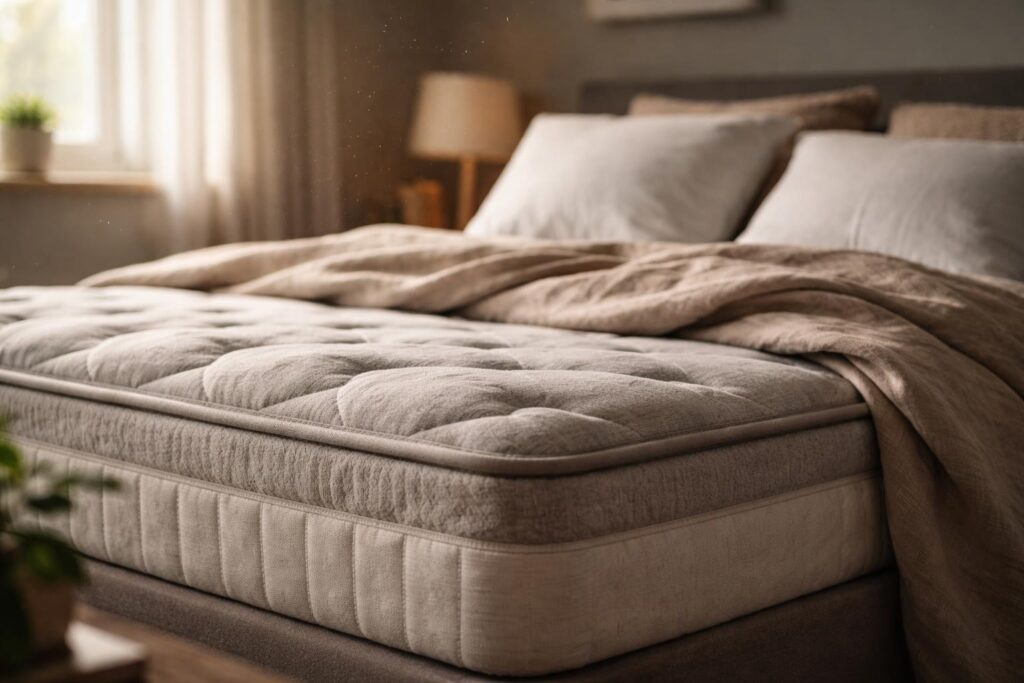
A mattress topper adds an extra comfort layer without replacing the entire bed. Toppers range from 1-4 inches thick and can adjust mattress firmness by making it softer or providing additional support.
Memory foam toppers contour to the body and relieve pressure points. Latex toppers sleep cooler and respond more quickly to movement. Feather and down toppers create a plush sleeping surface but require regular fluffing.
Toppers can extend mattress life by protecting against wear and body oils. They work particularly well for adjusting hotel beds or guest room mattresses to individual comfort preferences. A fitted sheet should go over both the topper and mattress to keep everything secure during sleep.
Essential Bedding for Comfort
Quality bedding directly affects how well someone sleeps each night. The right sheets regulate body temperature, supportive pillows maintain proper alignment, and layered bedding adapts to changing seasons throughout the year.
Selecting Breathable Bed Sheets
Breathable sheets help maintain a comfortable sleeping temperature throughout the night. Materials like cotton, bamboo-derived viscose, and linen allow air to circulate while wicking away moisture from the body.
Hot sleepers benefit most from sheets made with bamboo-derived fabrics[3], which naturally regulate temperature and pull moisture away from skin. These materials often feature a sateen weave that creates a smooth, soft surface against the skin. Cotton sheets with a percale weave also promote airflow and feel crisp and cool.
Thread count matters less than material quality. Sheets between 200 and 400 thread count typically balance breathability with durability. Higher thread counts don’t always mean better sleep quality.
People with sensitive skin should look for sheets with smooth finishes that reduce friction during movement. This prevents irritation and allows easier position changes during sleep. Machine-washable options make maintenance simpler and help keep bedding fresh.
Importance of Pillows for Support
The right pillow keeps the spine aligned and prevents neck and shoulder pain. Different sleeping positions require different pillow heights and firmness levels to maintain proper support.
Side sleepers need thicker pillows, typically 6 to 7 inches in loft, to fill the space between the shoulder and head. Back sleepers perform better with medium-height pillows around 4 to 5 inches that support the natural curve of the neck. Stomach sleepers require the thinnest pillows to prevent neck strain.
Shredded latex and down alternative fills[3] offer both support and adjustability. These materials resist heat retention better than solid foam while providing gentle contouring. Memory foam pillows conform closely to the head and neck but may trap more heat.
Pillow materials affect both comfort and deep sleep quality. Breathable covers made from organic cotton or bamboo help regulate temperature. Hypoallergenic fills reduce reactions for people with sensitivities.
Layering Bedding for Seasonal Comfort
Strategic bedding layers adapt to temperature changes without requiring complete bedding replacements. A lightweight base comforter works year-round when paired with removable layers.
Summer sleeping requires minimal, breathable layers. A single lightweight comforter or coverlet made from eucalyptus lyocell or cotton provides coverage without trapping heat. These materials promote airflow and prevent overheating during warm months.
Winter bedding benefits from multiple layers that trap warm air. Start with breathable sheets, add a medium-weight blanket, then top with a heavier comforter or duvet. Down and down alternative comforters with baffle box construction distribute fill evenly and maintain loft.
Duvet covers protect comforters and simplify cleaning. They allow easy switching between seasonal weights by keeping the same base comforter. Corner loops on comforters attach to duvet covers and prevent bunching or shifting during sleep. This layering approach gives sleepers control over their sleeping environment throughout the year.
Optimizing Bedroom Lighting
Light exposure directly affects the body’s circadian rhythm and ability to fall asleep. The right lighting setup involves blocking external light sources, choosing appropriate lamps, and controlling overhead brightness to create an environment that supports natural sleep patterns.
The Impact of Blackout Curtains
Blackout curtains help make bedrooms as dark as possible[4], which reinforces healthy circadian rhythm function. Light is the most powerful cue for the body’s biological clock that regulates sleep-wake cycles.
Standard curtains allow streetlights, car headlights, and early morning sun to enter the bedroom. These light sources can disrupt sleep quality and make it harder to stay asleep through the night. Blackout curtains block up to 99% of outside light.
People who work night shifts benefit especially from blackout curtains. They need to sleep during daylight hours when natural light is strongest. Blackout curtains also help reduce outside noise in some cases, creating a quieter sleep environment.
Choosing the Right Bedside Lamps
Bedside lamps should emit low levels of light with warm color temperatures. Lighting with low color temperature and illuminance makes it easier to feel drowsy[4] before bed.
The best bedside lamps offer adjustable brightness settings. This allows people to dim the light as they prepare for sleep. Lamps with warm-toned bulbs (2700K or lower) work better than cool white bulbs that can interfere with melatonin production.
Reading lights should position at an angle that illuminates books or devices without shining directly into the eyes. Touch-activated or remote-controlled lamps make it easy to turn off lights without getting out of bed.
Dimming Overhead Lights for Relaxation
Progressive dimming of overhead lights as bedtime approaches cues the brain’s circadian systems[5] without requiring major behavioral changes. Overhead lights shouldn’t be too bright in bedrooms, especially in the evening hours.
Installing dimmer switches on existing overhead fixtures gives control over light intensity. People can gradually reduce brightness during the hour before bed. This signals to the body that sleep time is approaching.
Avoiding bright overhead lights at night supports better sleep hygiene. Many people make the mistake of using bright ceiling lights right up until bedtime. This delays the natural production of melatonin and makes falling asleep more difficult.
Creating a Soothing Sleep Environment
The physical elements in a bedroom work together to either promote or disrupt quality rest. Soft textures, organized storage, and thoughtful decor choices all contribute to transforming an ordinary room into a sleep sanctuary[6] that supports better sleep.
Using Rugs and Soft Textures
A rug adds warmth and comfort underfoot, making the bedroom feel more inviting from the moment someone steps out of bed. Plush rugs in materials like wool or high-pile synthetics create a cozy foundation that absorbs sound and reduces noise levels in the room.
Soft textures throughout the space help signal relaxation to the brain. Velvet throw pillows, cotton blankets, and linen curtains add layers of comfort without overwhelming the senses. These materials also help with temperature regulation since natural fibers like cotton and linen allow for better airflow.
The tactile experience matters more than many people realize. When someone touches soft, quality fabrics before sleep, it can trigger a relaxation response. Combining different textures creates visual and physical interest while maintaining the calm atmosphere needed for rest.
Minimizing Clutter with Nightstands and Dressers
A nightstand serves as essential bedroom storage while keeping necessities within arm’s reach. Choosing one with drawers helps hide items like charging cables, reading glasses, and medications that would otherwise create visual chaos on the surface.
Dressers provide the bulk storage needed to keep clothing off chairs and floors. When clothes have designated spaces, the bedroom maintains a cleaner appearance that supports mental calm. A tidy sleep space reduces stress and makes it easier to wind down at night.
Vacuuming carpets and regularly organizing bedroom essentials[7] creates a more sanitary environment. Dust accumulation on surfaces and floors can trigger allergies that disrupt sleep quality. Storage furniture with smooth surfaces is easier to clean and maintain than open shelving that collects dust.
Decor Tips for a Calming Atmosphere
Color choices significantly impact how relaxing a bedroom feels. Neutral tones like soft grays, warm beiges, and muted blues create a peaceful backdrop. These colors don’t stimulate the brain the way bright reds or oranges do.
Key calming bedroom design elements:
- Minimal wall decorations to reduce visual stimulation
- Plants that improve air quality and add natural elements
- Artwork with peaceful scenes or abstract patterns in subdued colors
- Soft lighting fixtures with warm-toned bulbs
The goal is creating a space that feels intentionally designed for rest rather than activity. Every bedroom decor item should serve a purpose or contribute to relaxation. Removing items that don’t belong in a sleep space, like exercise equipment or work materials, helps the brain associate the room exclusively with rest and relaxation.
Controlling Air Quality and Temperature
The air people breathe and the temperature they maintain in their bedrooms directly affect how well they sleep. Poor air quality can disrupt rest, while the wrong temperature makes it harder to fall asleep and stay asleep through the night.
Choosing an Effective Air Purifier
An air purifier removes pollutants and allergens from bedroom air that interfere with breathing during sleep. These devices filter out dust, pollen, pet dander, and volatile organic compounds (VOCs) that many household items release.
When selecting an air purifier, people should look for models with HEPA filters. These filters capture 99.97% of particles as small as 0.3 microns. The purifier needs to match the bedroom size, which manufacturers list as the coverage area in square feet.
Elevate Your Health for Just $29.99/Month
Join the Precision Wellness Subscription at My Healing 365 and get discounted services, priority coaching access, virtual care, and exclusive wellness resources to support your physical, emotional, and hormonal health.
Join for $29.99/MonthNoise level matters since loud devices can prevent sleep. Models with a noise rating below 50 decibels work well for bedrooms. Some air purifiers include sleep modes that dim lights and reduce fan speed at night.
Monitoring indoor air quality[8] helps people know when their purifier is working effectively. Carbon dioxide levels between 3 to 5 times higher occur in bedrooms with closed windows, which makes proper ventilation essential.
Regulating Bedroom Temperature for Sleep
The brain expects body temperature to drop slightly when a person falls asleep. The ideal sleeping temperature is 60 to 67 degrees Fahrenheit[9] according to sleep experts.
Temperatures above 71°F cause restlessness and more frequent waking. When rooms drop below 53°F, people struggle to fall asleep initially. Most adults sleep best between 60-65°F, though children and elderly individuals may need slightly warmer conditions.
Bed cooling systems[10] provide targeted temperature control for people who run hot at night. Thermostats only set average temperatures for entire homes, so individual bedrooms need separate monitoring. Opening windows, using fans, or adjusting air conditioning helps maintain the right range throughout the night.
Adding Plants Such as the Snake Plant
Snake plants improve bedroom air quality by absorbing carbon dioxide and releasing oxygen at night. Unlike most plants that only produce oxygen during daylight, snake plants continue this process after dark.
These plants require minimal care and thrive in low light conditions typical of bedrooms. They tolerate irregular watering and don’t need frequent maintenance. Snake plants also remove toxins like formaldehyde and benzene from the air.
People should place one or two medium-sized snake plants in their bedroom for noticeable air quality benefits. The plants work alongside air purifiers rather than replacing them, since they can’t filter out all pollutants or allergens that affect sleep.
Reducing Noise and Distractions
Unwanted sounds can prevent falling asleep or wake someone during the night. White noise machines create consistent background sounds, while blocking techniques reduce disruptions from outside sources.
Benefits of a White Noise or Sound Machine
A white noise machine produces steady, unchanging sounds that mask sudden noises like traffic or neighbors. The consistent audio prevents the brain from registering abrupt sound changes that trigger alertness.
These devices work because they create a sound blanket covering multiple frequencies. When a car horn honks or a door slams, the white noise dampens the contrast between silence and the disruption. Many people find that consistent background noise helps them sleep[11] better than complete silence.
Sound machines offer different options beyond basic white noise. Pink noise emphasizes lower frequencies and sounds like steady rainfall. Brown noise goes even deeper, resembling ocean waves or strong winds.
Common white noise machine features:
- Volume controls for personal preference
- Timer settings for automatic shutoff
- Multiple sound options (fan, rain, ocean)
- Portable designs for travel
The machines also help babies and children sleep by recreating the consistent sounds heard in the womb.
Strategies to Block Out Noise for Restful Sleep
Physical barriers reduce noise entering the bedroom from outside or neighboring rooms. Heavy blackout curtains muffle sound while blocking light[11], making them useful for city dwellers facing street noise.
Foam earplugs offer an affordable option to block out noise during sleep. They compress when inserted and expand to fill the ear canal. Silicone earplugs work similarly but require cleaning between uses rather than replacement.
Effective noise blocking methods:
- Door sweeps fill gaps under bedroom doors
- Acoustic panels or tapestries on thin walls
- Bookshelves filled with books absorb sound
- Noise-canceling earbuds for those sensitive to earplugs
Rearranging furniture creates distance from noise sources. Moving the bed away from shared walls or windows reduces exposure to disruptive sounds. Some people benefit from switching to a quieter room in their home if available.
Double-pane windows provide superior noise reduction compared to single-pane options. They block almost as much sound as walls while also improving temperature control.
Sleep-Boosting Accessories and Routine Habits
Quality sleep requires more than just a comfortable bed. Simple accessories like sleep masks combined with consistent routines and proper sleep hygiene practices create an environment that supports better rest throughout the night.
Incorporating Sleep Masks
Sleep masks block unwanted light that can disrupt the body’s natural sleep cycle. Light exposure at night interferes with circadian rhythms, making it harder to fall asleep and stay asleep. A quality silk eye mask[12] provides complete darkness while feeling comfortable against the skin.
The most effective sleep masks feature contoured designs that don’t press against the eyes. They should fit snugly without causing pressure headaches or leaving marks on the face. Adjustable straps allow wearers to customize the fit for their head size.
People who work night shifts or live in areas with bright street lights benefit most from wearing sleep masks. These accessories are also useful for daytime naps or when traveling across time zones.
Maintaining a Consistent Sleep Schedule
Going to bed and waking up at the same time each day strengthens the body’s internal clock. Adults need at least seven hours of sleep per night to function properly. Sticking to a regular schedule makes falling asleep easier and improves sleep quality.
Weekend sleep patterns should match weekday routines as closely as possible. Sleeping in on Saturdays and Sundays disrupts the consistency the body needs. Setting a bedtime alarm helps remind people when to start winding down for the night.
Creating a pre-sleep routine signals to the body that it’s time to rest. This might include dimming lights, reading, or listening to calming music 30 to 60 minutes before bed.
Enhancing Sleep Hygiene with Essentials
Good sleep hygiene involves creating an environment and habits that promote restful sleep. The bedroom should be cool, quiet, and dark. Experts recommend keeping the temperature between 60 and 68 degrees Fahrenheit for optimal sleep.
White noise machines[12] mask disruptive sounds from traffic or neighbors. These devices produce consistent background noise that helps the brain tune out sudden disturbances. Some people prefer fans or air purifiers that serve the same purpose while also improving air circulation.
Blackout curtains prevent outside light from entering the bedroom. They work particularly well for people who sleep during daylight hours or live in urban areas with significant light pollution. Pillow sprays with lavender or other calming scents can also support relaxation before sleep.
Frequently Asked Questions
Choosing the right bedroom items involves understanding which products address specific sleep problems and how simple changes create better rest conditions. Temperature control, light blocking, and calming routines all play important roles in sleep quality.
What are the most effective bedroom items to improve sleep quality?
Blackout curtains rank among the most effective items because they block external light that disrupts melatonin production. Complete darkness helps the brain recognize it’s time for sleep.
A white noise machine masks disruptive sounds like traffic or neighbors. The consistent background noise prevents sudden sounds from waking someone during the night.
A supportive mattress keeps the spine aligned during sleep. Side sleepers need softer surfaces while back sleepers benefit from medium-firm support.
Temperature control items make a significant difference. The ideal bedroom temperature sits around 65 degrees Fahrenheit. A fan provides both air circulation and white noise while helping maintain a cooler room.
Cotton or bamboo sheets offer breathability and moisture-wicking properties. These materials help regulate body temperature throughout the night.
Which sleep products are best for adults with insomnia?
Adults with insomnia benefit from products that reduce stimulation and create consistent sleep signals. Blue light blocking glasses worn 2-3 hours before bed help minimize the melatonin suppression caused by screens and artificial lighting.
A weighted blanket provides deep pressure stimulation that can reduce anxiety and promote relaxation. Most adults use blankets weighing 10% of their body weight.
Aromatherapy diffusers with lavender or chamomile essential oils create a calming scent association with bedtime. The familiar scent can signal the brain that it’s time to wind down.
Earplugs block out noise disturbances for light sleepers. Foam versions are disposable while silicone options can be washed and reused.
A comfortable pillow that matches sleep position prevents neck pain and frequent repositioning. Side sleepers need thicker pillows while stomach sleepers require thinner options.
What should you put in a bedroom to create a calmer, more sleep-friendly environment?
A bedroom focused on rest removes work items, exercise equipment, and electronic devices. Keeping only sleep-related items strengthens the mental connection between the bedroom and sleeping.
Dimmable warm lighting allows gradual adjustment in the evening hours. Lights should be dimmed about two hours before bed, with only one or two soft light sources remaining an hour before sleep.
An air purifier improves air quality by removing dust, allergens, and other particles that can irritate breathing during sleep. Clean air contributes to more restful nights.
Calming wall colors like soft blues, greens, or neutral tones promote relaxation better than bright or stimulating shades. The overall color scheme should feel peaceful rather than energizing.
Storage solutions like under-bed bins keep necessary items accessible without creating visual clutter. A tidy space reduces mental stress when entering the bedroom.
Hypoallergenic bedding protects against dust mites and allergens. Tightly woven fabrics and washable pillow protectors reduce exposure to common triggers.
What is the 3-2-1 bedroom method, and how does it support better sleep?
The 3-2-1 bedroom method provides a simple countdown for preparing the sleep environment. The specific timing helps create consistent habits that signal the body to prepare for rest.
Three hours before bed, people stop consuming caffeine and finish eating large meals. This gives the body time to process food and allows stimulants to wear off.
Two hours before bed, they stop working and put away electronic devices. This creates separation between daytime activities and sleep time.
One hour before bed, they dim the lights and begin a calming routine like reading or light stretching. This final hour focuses entirely on relaxation.
The method works because it provides clear time markers for transitioning from active daytime mode to rest mode. Following the same pattern each night reinforces the body’s natural sleep-wake cycle.
Which natural sleep aids are considered the strongest and safest to try?
Melatonin supplements help regulate the sleep-wake cycle when taken 30-60 minutes before bed. Doses between 0.5-5 mg work for most adults, with lower doses often proving just as effective as higher amounts.
Magnesium supports muscle relaxation and helps calm the nervous system. Many people are deficient in magnesium, and supplementing 200-400 mg before bed can improve sleep quality.
Valerian root has been used for centuries as a sleep aid. It may help people fall asleep faster and improve overall sleep quality, though effects vary between individuals.
Chamomile tea provides gentle calming effects. The warm beverage becomes part of a bedtime routine that signals the body to prepare for sleep.
L-theanine, an amino acid found in tea, promotes relaxation without causing drowsiness during the day. Taking 200-400 mg before bed can improve sleep quality.
Glycine, another amino acid, helps lower body temperature to support sleep onset. A dose of 3 grams before bed may help people fall asleep faster.
How can feng shui bedroom adjustments help promote deeper, more restorative sleep?
Feng shui principles focus on arranging the bedroom to promote calm energy flow. The bed should be positioned against a solid wall with a clear view of the door, but not directly in line with it.
Keeping the space under the bed clear allows energy to circulate freely. Storage under the bed can create stagnant energy that disrupts rest.
Mirrors should not face the bed directly. Feng shui practitioners believe mirrors create too much active energy that prevents deep sleep.
Electronics and exercise equipment don’t belong in a feng shui bedroom because they represent active energy. The bedroom should contain only items related to rest and relaxation.
Soft, rounded furniture edges create gentler energy than sharp corners. Nightstands and dressers with curved edges contribute to a more peaceful atmosphere.
Pairs of matching items like nightstands or lamps create balance and symmetry. This visual harmony promotes a sense of calm that supports better sleep.
Post Views: 2
References
- Bedroom upgrades under $100 that will help you sleep better. https://www.homesandgardens.com/shopping/bedroom-upgrades-to-help-you-sleep-better Accessed April 29, 2026
- Choose the Right Mattress for Better Sleep. https://www.consumerreports.org/home-garden/mattresses/buying-guide/ Accessed April 29, 2026
- Best Bedding of 2026. https://www.sleepfoundation.org/best-bedding Accessed April 29, 2026
- How to Design the Ideal Bedroom for Sleep. https://www.sleepfoundation.org/bedroom-environment/how-to-design-the-ideal-bedroom-for-sleep Accessed April 29, 2026
- Bedroom Lighting Design for Better Sleep: A Room-by-Room Guide. https://www.mattressnut.com/bedroom-lighting-design-sleep/ Accessed April 29, 2026
- 12 Ways To Transform Your Bedroom Into A Healthy Sleep Sanctuary. https://saminasleep.com/2024/09/23/12-ways-to-transform-your-bedroom-into-a-healthy-sleep-sanctuary/ Accessed April 29, 2026
- Bedroom Environment: What Elements Are Important?. https://www.sleepfoundation.org/bedroom-environment Accessed April 29, 2026
- Indoor air quality for bedrooms: Get better rest, sleep and comfort. https://www.airthings.com/resources/indoor-air-quality-sleep-bedrooms Accessed April 29, 2026
- Attention Required!. https://sleepdelivered.com/best-cooling-system/ Accessed April 29, 2026
- Best Bed Cooling Systems 2026. https://www.forbes.com/sites/forbes-personal-shopper/article/best-bed-cooling-system/ Accessed April 29, 2026
- 14 Tips for How to Block Out Noise While Sleeping. https://amerisleep.com/blog/how-to-block-out-noise-while-sleeping/ Accessed April 29, 2026
- The Very Best Sleep Products of 2026 – Get Better Zzz This Year. https://www.sleepfoundation.org/best-sleep-products Accessed April 29, 2026

























