
Medically Reviewed
Dr. Jose Rossello, MD, PhD, MHCM
Preventive Medicine & Public Health Specialist
Last Reviewed: April 25, 2026
Your bedroom should be more than just a place to sleep. It’s where you unwind after long days, recharge your energy, and escape from daily stress. Transforming your bedroom into a true sleep sanctuary doesn’t require a complete renovation or expensive designer help—simple, thoughtful changes can create a calming space that promotes better rest and relaxation.
The foundation of a cozy bedroom[1] starts with understanding what makes a space feel peaceful. Elements like soft lighting, comfortable textures, calming colors, and organized surroundings all work together to create an environment that helps your mind and body relax. When you focus on removing clutter and choosing the right layout, you make it easier to move around at any time of day or night.
Small adjustments can make a big difference in how your bedroom feels. Whether it’s swapping out harsh overhead lights for gentler lamps, adding plants to bring nature indoors, or investing in better bedding, each change contributes to a more restful atmosphere. These practical strategies help anyone create a relaxing bedroom without breaking the budget or spending weeks on renovations.
Table of Contents
Key Takeaways
- Creating a relaxing bedroom involves combining comfort elements like soft lighting, calming colors, and cozy textures
- Decluttering your space and organizing storage helps reduce stress and creates a more peaceful environment
- Simple changes such as adding plants, using ambient lighting, and choosing comfortable bedding transform your room into a sleep sanctuary
Embracing Calming Color Palettes
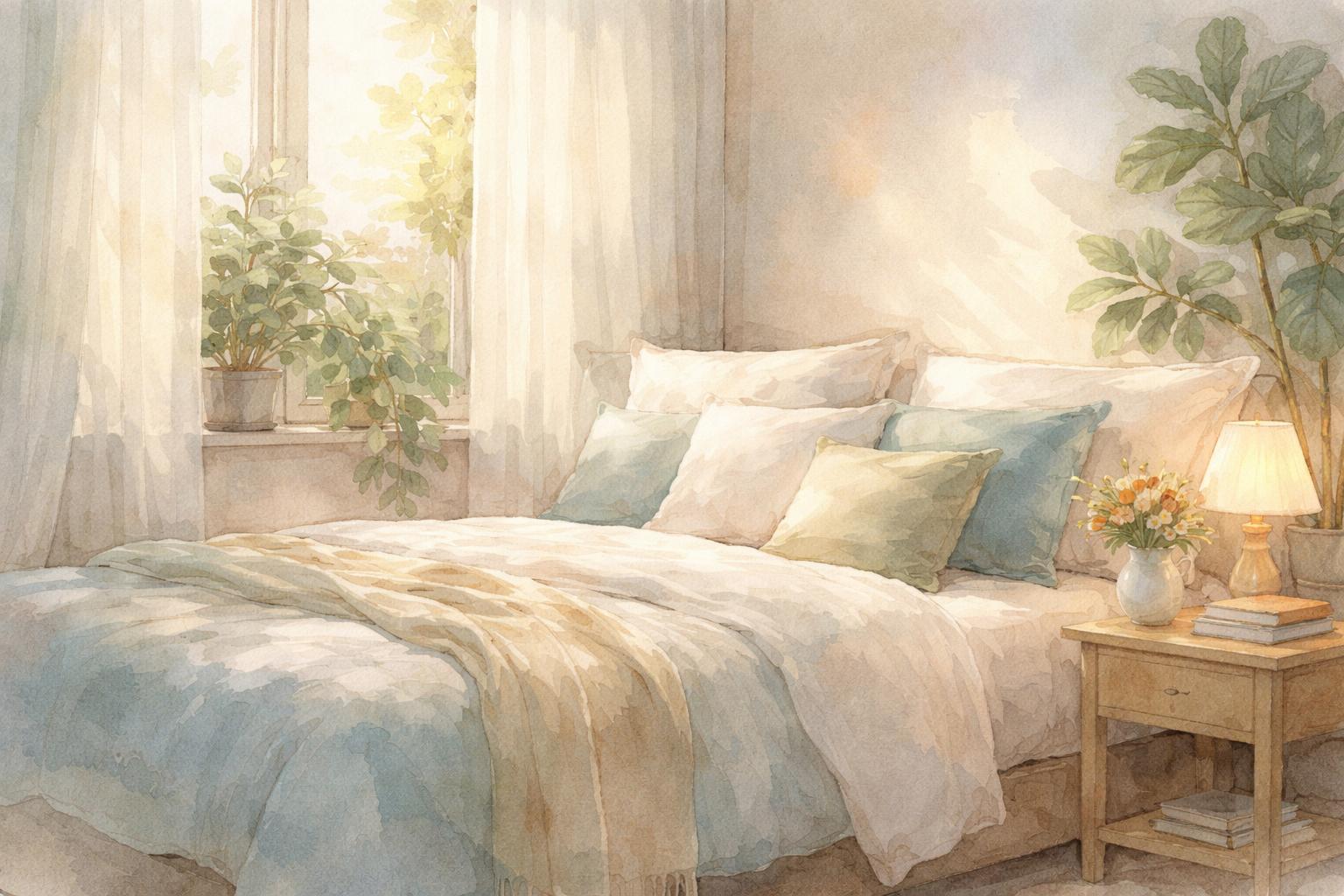
The colors in a bedroom directly affect mood and sleep quality. Soft blues, greens, and neutrals create a peaceful atmosphere that helps the mind and body relax.
Choosing Soothing Paints and Wallpapers
Paint colors set the foundation for a relaxing bedroom. Soft blues promote calmness and can lower heart rate and blood pressure. Lavender and pale purple shades encourage rest and reduce stress levels.
Calming bedroom colors[2] like muted grays and warm whites work well for people who prefer subtle backgrounds. These shades reflect light gently without creating harsh contrasts.
Wallpaper offers texture and visual interest without overwhelming the senses. Patterns with natural motifs like leaves or waves in subdued colors add depth. Textured wallpaper in solid calming colors creates dimension on walls while maintaining a peaceful feel.
Light-colored paints make small bedrooms feel more spacious. They bounce natural light around the room and create an airy environment.
Incorporating Earthy and Neutral Tones
Earthy tones connect bedroom spaces to nature and create grounding environments. Sage green brings the outdoors inside and pairs well with natural wood furniture. Warm beige and taupe shades provide comforting backdrops that feel cozy without being dark.
A neutral palette allows flexibility in bedroom color schemes[3] and decor changes. Creams, tans, and soft grays work with various design styles from modern to traditional.
Terra cotta and clay tones add warmth to spaces that receive limited natural light. These colors create intimate settings perfect for unwinding. Pairing earthy tones with crisp white trim defines spaces while keeping the overall look calm.
Natural materials like linen curtains and cotton bedding in neutral shades enhance the earthy color scheme. The combination of natural textures and tones creates a cohesive, relaxing retreat.
Accent Walls for Visual Harmony
An accent wall adds interest without cluttering the visual field. Painting one wall in a deeper shade of the room’s main color creates depth. This technique works well behind the bed as a focal point.
Sage green or dusty blue accent walls complement neutral palettes and draw the eye gently. The contrast should be noticeable but not jarring. Staying within the same color family maintains harmony.
Wallpaper on a single wall provides pattern and texture in controlled doses. Geometric designs in calming colors add modern flair to minimalist bedroom[4] designs. Natural patterns like wood grain or stone textures bring organic elements indoors.
Accent walls work best on walls without windows or doors. This creates a clean visual line. The accent wall should enhance the room’s existing features rather than compete with them for attention.
Maximizing Natural Light and Window Treatments
Natural light affects mood and sleep quality in bedrooms, while the right window treatments balance brightness during the day with darkness at night. The direction windows face and the type of curtains used determine how much control you have over light levels throughout the day.
Letting Sunlight In
East-facing windows bring in morning light[5], while west-facing windows provide warm afternoon glow. North-facing windows offer steady but indirect light throughout the day.
Hanging curtain rods high and wide makes windows appear larger and allows more light to enter. The rod should sit 4 to 6 inches above the window frame and extend 3 to 6 inches beyond each side.
Light colors on walls and ceilings help sunlight bounce around the room. Painting window sills and surrounding wall space in semi-gloss white[6] creates a reflective surface that increases brightness. The semi-gloss finish reflects more light than flat paint while maintaining a natural appearance.
Mirrors placed perpendicular to windows multiply natural light sources without creating glare. Avoid placing large mirrors directly across from windows, as this can cause uncomfortable reflections.
Selecting Sheer and Blackout Curtains
Sheer curtains filter natural light[7] while maintaining privacy during the day. Materials like linen, bamboo, or lace reduce harsh direct sunlight without blocking ambient light.
Layering provides flexibility for different times of day. Installing both sheers and blackout curtains on the same window allows control over light levels. The sheers stay closed during the day for soft filtered light, while blackout curtains close at night for darkness.
Blackout curtains block external light sources that disrupt sleep, including streetlights and early morning sun. They work best in bedrooms where complete darkness improves sleep quality.
Light-filtering curtains offer a middle option between sheer and blackout styles. These treatments reduce brightness without eliminating all natural light, making them suitable for people who prefer some ambient light while sleeping.
Enhancing Views and Connections to Nature
Clear, unobstructed windows create visual connections to outdoor spaces. Pulling furniture away from window areas prevents blocking natural views and maintains an open feel in the room.
Clean windows maximize light transmission and clarity of outdoor views. Dust, grime, and water spots reduce the amount of light entering a space. Windows should be cleaned monthly on the inside and deep cleaned twice yearly on the outside[5], including screens.
Low-profile furniture near windows preserves sightlines to gardens, trees, or sky. Heavy, dark window treatments weigh down a room and obscure outdoor views.
Glass doors or large picture windows strengthen the connection between indoor and outdoor spaces. These features bring the outdoors in by framing natural elements as part of the bedroom design. Plants placed near windows reinforce this relationship while benefiting from available sunlight.
Layering Ambient and Task Lighting
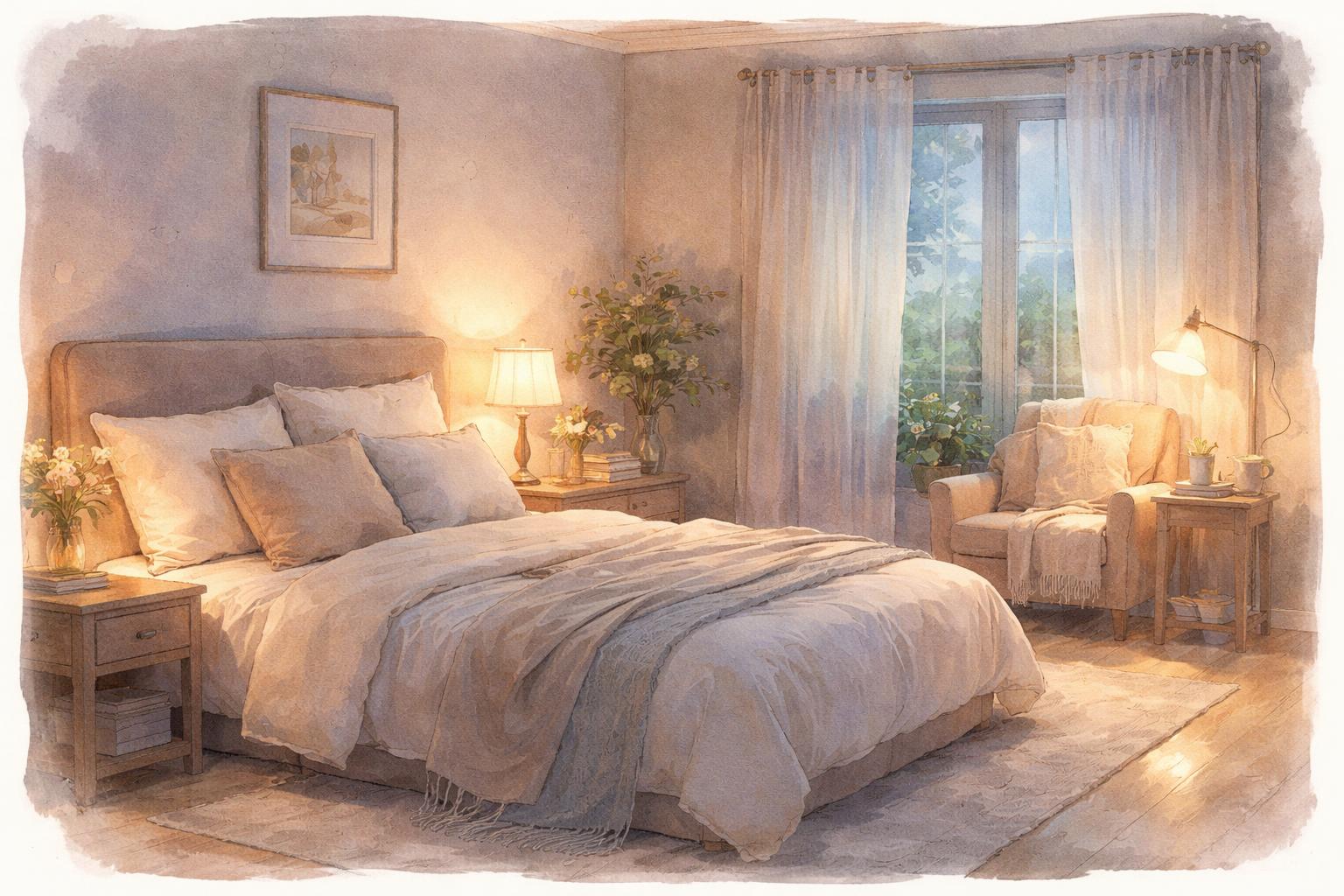
Good bedroom lighting combines soft background light with focused light for specific activities. The right mix of ambient lighting, task lighting, and dimmers creates a calm space that adapts to different needs throughout the day.
Creating Soft, Ambient Lighting
Ambient lighting serves as the foundation for bedroom illumination. This base layer provides general light without harsh brightness or dark shadows.
Recessed ceiling lights with wide beam angles work well for ambient lighting. They spread light evenly across the room without creating glare. Window treatments like shades or curtains also control natural daylight, which acts as ambient light during daytime hours.
Cove lighting offers a more elegant approach. These hidden fixtures sit behind architectural details like ceiling ledges or crown molding. The light bounces off walls or ceilings to create a soft, indirect glow that feels warm and inviting.
The goal is to create what lighting designers call a “soft blanket of light” that fills the room without drawing attention to the fixtures themselves. This background light should be gentle enough to relax in but bright enough to move around safely.
Using Task Lighting Thoughtfully
Task lighting provides focused illumination for reading, getting dressed, or other activities. Unlike ambient lighting, these fixtures direct light exactly where needed.
Bedside lamps are the most common task lights in bedrooms. They should sit at a height that prevents light from shining directly into eyes while reading. Table lamps work well on nightstands, while a floor lamp can stand beside a reading chair.
Pendant lights hung over nightstands offer another option. They free up surface space while providing direct overhead light. The fixture should hang low enough to light the bed area but high enough to avoid hitting anyone’s head.
Under-cabinet lighting helps in closets and dressing areas. These strips illuminate clothing and accessories without taking up space. Wall-mounted reading lights with adjustable arms let each person control their own light without disturbing a sleeping partner.
Choosing Warm-Toned Bulbs
Bulb color temperature significantly affects how relaxing a bedroom feels. Light color is measured in Kelvins, with lower numbers producing warmer tones.
Warm-toned bulbs in the 2700-3000K range create a cozy atmosphere. This warm white light resembles candlelight or sunset, which signals the body to wind down. Cool white or daylight bulbs above 4000K feel harsh and can interfere with sleep preparation.
LED bulbs now offer warm tones while using less energy than traditional incandescent bulbs. Smart LEDs allow users to adjust both brightness and color temperature throughout the day. Morning light can be slightly cooler to promote alertness, while evening light shifts warmer to encourage relaxation.
All light sources in the bedroom should use similar color temperatures. Mixing warm and cool bulbs creates an unbalanced feeling that disrupts the calm atmosphere.
Adding Dimmer Switches and Wall Sconces
Dimmer switches transform how lighting functions in a bedroom. They allow adjustment of light intensity to match different activities and times of day.
Installing dimmers on overhead lights and bedside lamps provides flexibility. Bright light works for cleaning or getting dressed, while dimmed light creates ambiance for relaxing before sleep. Properly layered bedroom lighting[8] gives multiple options to suit changing needs.
Wall sconces add both ambient and task lighting depending on placement. Mounted beside the bed, they serve as reading lights. Installed on either side of a dresser or mirror, they provide grooming light. Sconces aimed upward bounce light off the ceiling for soft ambient glow.
Smart lighting controls take dimming further by programming different scenes. A “bedtime” scene might dim all lights to 20% with warm tones, while a “morning” scene brings lights up gradually. These automated adjustments help maintain consistent sleep-wake rhythms.
Integrating Soothing Textures and Cozy Bedding
Soft materials and comfortable bedding create a relaxing bedroom by adding warmth and comfort to the space. The right combination of plush surfaces, layered fabrics, and textured pieces transforms a plain room into a peaceful retreat.
Selecting Plush Rugs and Large Area Rugs
A plush rug adds instant comfort underfoot and helps define the bedroom space. Soft, thick rugs made from materials like wool or high-pile synthetic fibers provide cushioning when stepping out of bed in the morning.
A large area rug anchors the room and can extend under the bed and nightstands. This creates a unified look while adding warmth to hard flooring surfaces like wood or tile. The rug should be large enough to extend at least 18-24 inches beyond each side of the bed.
Texture matters when choosing bedroom rugs. Shag rugs offer deep softness, while cut-pile options provide a smooth, velvety feel. Neutral colors work well for versatility, though warm tones like cream, beige, or soft gray add to the cozy atmosphere.
Incorporating Layered Soft Textiles
Layering bedding[1] creates depth and allows for adjusting comfort levels throughout the year. Start with quality sheets in breathable fabrics like cotton or linen, then add blankets and comforters in varying weights.
Multiple layers make the bed look fuller and more inviting. A flat sheet, lightweight blanket, and duvet or comforter provide options for different temperatures. Each layer adds visual interest through different colors, patterns, or textures.
Soft textiles extend beyond the bed. Window treatments in heavier fabrics like velvet or lined curtains add warmth and help block light. Fabric wall hangings or upholstered panels introduce additional softness to hard wall surfaces.
Upholstered Headboards and Canopy Beds
An upholstered headboard brings soft texture to the focal point of the room. Fabric-covered headboards in materials like linen, velvet, or faux fur provide a comfortable surface for sitting up in bed while reading.
Padded headboards come in various heights and styles. Tall headboards create a dramatic effect, while lower profiles suit smaller rooms. Tufted designs add visual texture, and smooth upholstery offers a clean, modern look.
Canopy beds create an enclosed, cocoon-like feeling that promotes relaxation. Draping soft fabric from the canopy frame adds privacy and softens the overall bedroom aesthetic. Even without full draping, the canopy structure itself defines the sleeping area as a special zone within the room.
Throw Pillows and Chunky Knit Throws
Throw pillows in varied sizes and textures make the bed look more welcoming. Mix different fabrics like velvet, linen, and faux fur to create visual and tactile interest. Three to five pillows typically provide enough variety without overwhelming the space.
A chunky knit throw draped across the foot of the bed or folded over a chair adds both style and function. These thick, textured blankets provide extra warmth and create a handmade, personal touch. Knit throws work well in neutral colors or can serve as an accent piece in bolder shades.
Wrapping yourself in soft materials[9] affects how the body feels and can improve relaxation. Keep favorite soft throws within easy reach for immediate comfort.
Bringing Nature Indoors for Tranquility
Natural elements create a calming atmosphere that helps reduce stress and improve sleep quality. Plants purify the air while wood and flowers add organic textures that make bedrooms feel more peaceful.
Houseplants and Indoor Plants
Adding houseplants to a bedroom transforms it into a restful retreat. Snake plants and pothos are excellent choices because they require minimal care and thrive in low light conditions. These plants also filter toxins from the air throughout the night.
Peace lilies and spider plants work well for people who want to bring the outdoors in without complicated maintenance routines. They tolerate occasional neglect and still produce lush greenery. Most houseplants only need watering once or twice per week.
Placing plants on nightstands, dressers, or hanging from the ceiling creates visual interest at different heights. Biophilic bedroom design[10] focuses on incorporating living elements that connect people to nature. Indoor plants also add humidity to dry bedroom air, which helps with breathing during sleep.
Decorating With Fresh Flowers
Fresh flowers provide instant beauty and natural fragrance to any bedroom. Lavender, jasmine, and chamomile offer calming scents that promote relaxation. A simple vase of seasonal blooms on a bedside table brings life to the space.
Changing flowers weekly keeps the room feeling fresh and gives people something pleasant to look at before falling asleep. Eucalyptus branches last longer than traditional flowers and release a soothing aroma. They can hang in the shower or sit in a tall vase near the bed.
White and pastel-colored flowers create a softer, more tranquil mood than bright reds or oranges. Dried flowers also work well for those who want low-maintenance nature-inspired decor[11] that lasts for months.
Using Natural Materials in Furniture
Wooden furniture adds warmth and organic texture to bedrooms. Oak, walnut, and pine bring earthy tones that make spaces feel grounded. Solid wood bed frames and nightstands are more durable than particle board alternatives.
Rattan and bamboo pieces introduce lighter natural textures without overwhelming a room. Woven baskets serve as both storage and decorative elements. These materials age beautifully and develop character over time.
Natural fiber rugs made from jute, sisal, or wool add softness underfoot while maintaining an organic aesthetic. Cotton and linen bedding in neutral tones complement wooden furniture perfectly. Avoiding synthetic materials in favor of natural ones creates a more cohesive, calming bedroom environment[12].
Decluttering and Smart Storage Solutions
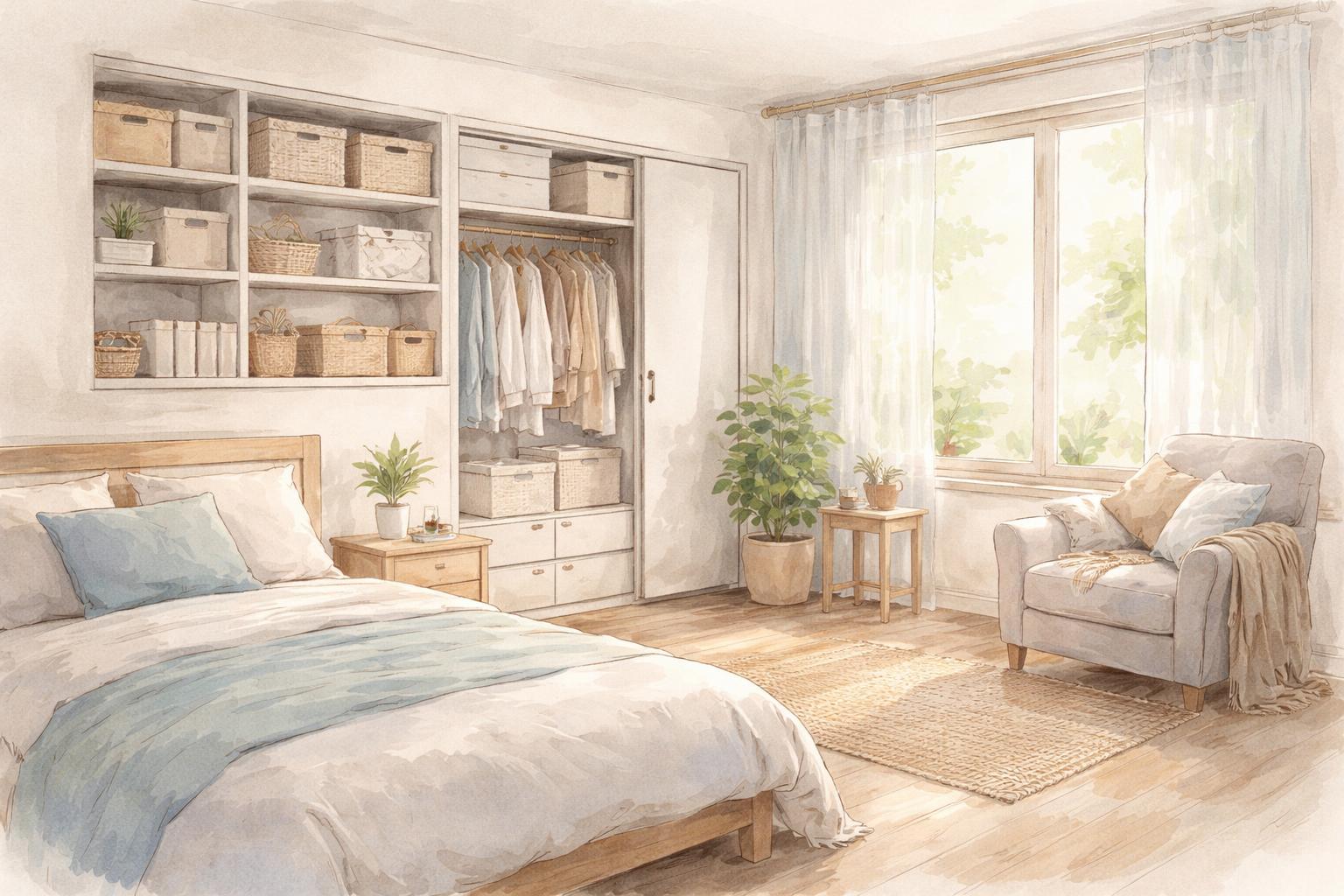
A clutter-free bedroom creates a calm environment that promotes better sleep and relaxation. Strategic storage choices keep belongings organized while maintaining a peaceful atmosphere.
Effective Decluttering Methods
The first step involves purging items that no longer serve a purpose. People should remove unused clothes, books, and decorative items that create visual noise. Decluttering regularly[13] prevents belongings from accumulating over time.
Creating designated spots for each category of items makes maintaining organization easier. Pajamas belong in one drawer, while workout clothes stay in another. This system ensures everything has a home and reduces daily stress.
Storage bins and drawer dividers help contain smaller items that tend to scatter. These organizers keep jewelry, accessories, and personal items separated and easy to find. Clear containers work well because they allow visibility without opening each box.
The key is keeping surfaces mostly clear. Nightstand tops should hold only essentials like a lamp, alarm clock, and perhaps one meaningful decoration. Too many objects create visual clutter that disrupts the peaceful bedroom atmosphere.
Utilizing Under-Bed Storage
The space beneath the bed offers valuable storage potential that often goes unused. Under-bed storage drawers[14] made from wood or durable materials provide discreet organization for seasonal clothing and extra linens.
Storage containers on wheels make accessing items simple. These bins slide out easily for retrieval and push back under the bed when not needed. Bed skirts hide these storage solutions from view while maintaining a polished look.
Platform beds with built-in storage maximize this space even more effectively. Some designs feature hydraulic lifts that raise the entire mattress to reveal large storage compartments underneath. This solution works particularly well for storing bulky items like extra blankets or out-of-season clothes.
Choosing Nightstands and Dressers for Organization
Nightstands with multiple drawers provide more functionality than simple tables. Small three-drawer dressers work as nightstands[15] while offering substantial storage without requiring additional floor space.
Six-drawer dressers with both enclosed and open storage create versatile organization options. The drawers hold folded clothes while open shelving displays decorative items or houses storage baskets for smaller accessories.
Furniture pieces should match the bedroom’s size. Oversized dressers overwhelm small rooms, while tiny nightstands lack sufficient storage in larger spaces. Measuring the room before purchasing ensures pieces fit comfortably while providing adequate organization.
Multi-functional furniture maximizes limited space. A dresser can double as a TV stand, while a nightstand with a charging station eliminates cord clutter. These smart storage solutions reduce the number of furniture pieces needed while increasing overall functionality.
Designing Calming Spaces With Functional Furniture
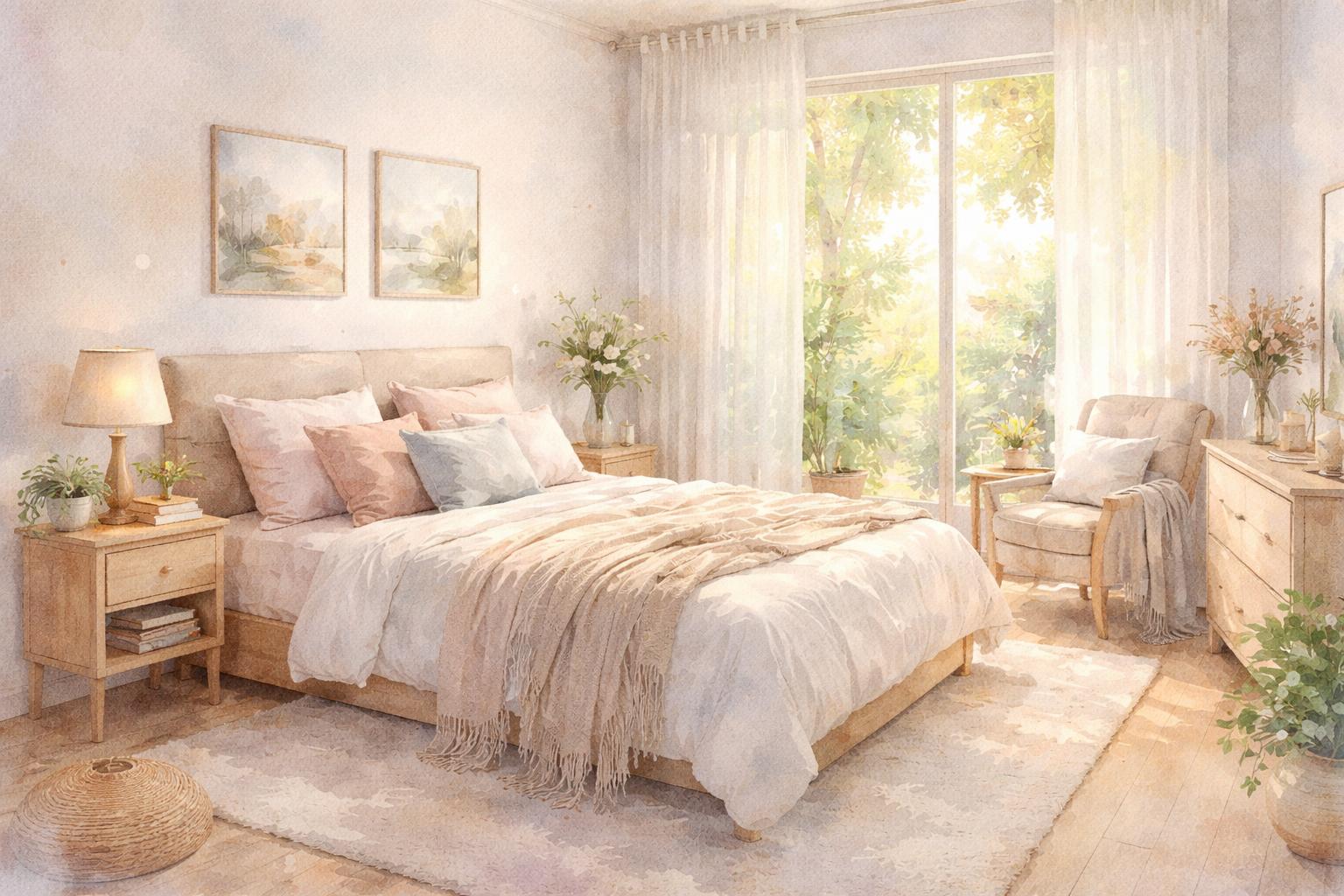
The right furniture pieces can transform a bedroom into a peaceful retreat while serving practical purposes. Thoughtful placement of seating areas and storage solutions creates dedicated zones for rest and quiet activities.
Selecting the Right Armchair or Chaise Lounge
An armchair or chaise lounge provides a dedicated spot for reading, meditation, or simply unwinding away from the bed. The key is choosing pieces that match the room’s overall aesthetic while offering genuine comfort.
Upholstered chairs in soft fabrics like linen or velvet add a tactile element that enhances relaxation. Neutral colors such as beige, gray, or cream help maintain a calm atmosphere. The chair should fit the available space without overwhelming the room.
A chaise lounge works well in larger bedrooms, offering a place to stretch out fully. Position it near a window to take advantage of natural light during daytime reading sessions. Add a small side table within arm’s reach to hold beverages, books, or a table lamp for evening use.
The chair’s style should complement existing bedroom furniture rather than clash with it. Mid-century modern, traditional, or minimalist designs each create different moods but can work effectively in a relaxing bedroom[9] when chosen with intention.
Creating a Versatile Bookshelf Nook
A bookshelf serves double duty by reducing clutter and displaying items that bring joy. Rather than letting books pile up on nightstands or floors, a dedicated bookshelf keeps the space organized and visually appealing.
Choose a bookshelf height and width that fits the bedroom’s dimensions. Tall, narrow units work in tight spaces, while low, wide options can act as room dividers in open layouts. The bookshelf should be easily accessible from the reading chair or bed.
What to Display:
- Books for current reading and favorites for rereading
- Framed photographs of meaningful people and places
- Small plants or fresh flowers
- Natural elements like stones or shells
- Minimal decorative objects
Keep the bookshelf from becoming overcrowded. Leave some empty space on shelves to prevent the area from feeling chaotic. Arrange items in groups of odd numbers for visual balance.
Balancing Relaxation and Functionality
Furniture placement affects how peaceful a bedroom feels. Each piece should serve a clear purpose without making the room feel cramped or cluttered.
Position furniture to create clear pathways through the room. The bed remains the focal point, but a well-placed armchair and bookshelf establish a secondary zone for daytime activities. This separation helps maintain the bed as a relaxing sanctuary[9] rather than a multipurpose surface.
Consider scale when selecting furniture. Oversized pieces dominate small rooms and create tension rather than calm. Measure the space before purchasing to ensure proper fit.
Multi-functional furniture maximizes limited space. An ottoman with hidden storage holds extra blankets while serving as a footrest. A bookshelf with a built-in desk creates a compact work area that can be visually closed off when not in use.
Enhancing Atmosphere With Scent and Personal Touches
The right scents and carefully chosen decor create an immediate sense of calm when entering a bedroom. These elements work together to transform an ordinary sleeping space into a personal retreat that appeals to multiple senses.
Scented Candles and Essential Oil Diffusers
Scented candles[9] bring both soft ambient light and soothing aromas to a relaxing bedroom. Lavender, chamomile, and vanilla scents promote relaxation and better sleep quality. A person should place candles on nightstands or dressers where they’re visible but away from curtains or bedding.
Essential oil diffusers offer a flame-free alternative that disperses fragrance continuously throughout the space. Popular oils for a calm bedroom include eucalyptus, sandalwood, and bergamot. Diffusers work well on bedside tables or dresser tops where they can effectively spread scent.
Someone can also create DIY room sprays[16] using essential oils and water for a quick refresh. Spraying linens and pillows before bed adds an extra layer of comfort. The key is choosing scents that feel personally calming rather than following trends.
Curating Calming Decor and Minimalist Accessories
Less clutter creates more mental space in a cozy bedroom. Keeping only meaningful items like framed photos of loved ones or a small stack of favorite books reduces visual noise. Removing excess decorations allows the mind to rest more easily.
Natural elements bring grounding energy to the space. A small vase with fresh flowers, a marble bookend, or smooth stones add earthy touches[9] without overwhelming the room. These pieces connect the indoor space to nature.
Bedside essentials should serve clear purposes. Items like a water carafe, eye mask, or favorite book belong within arm’s reach. Everything else can find a home in drawers or closets to maintain clean surfaces.
Adding Personal Style and Character
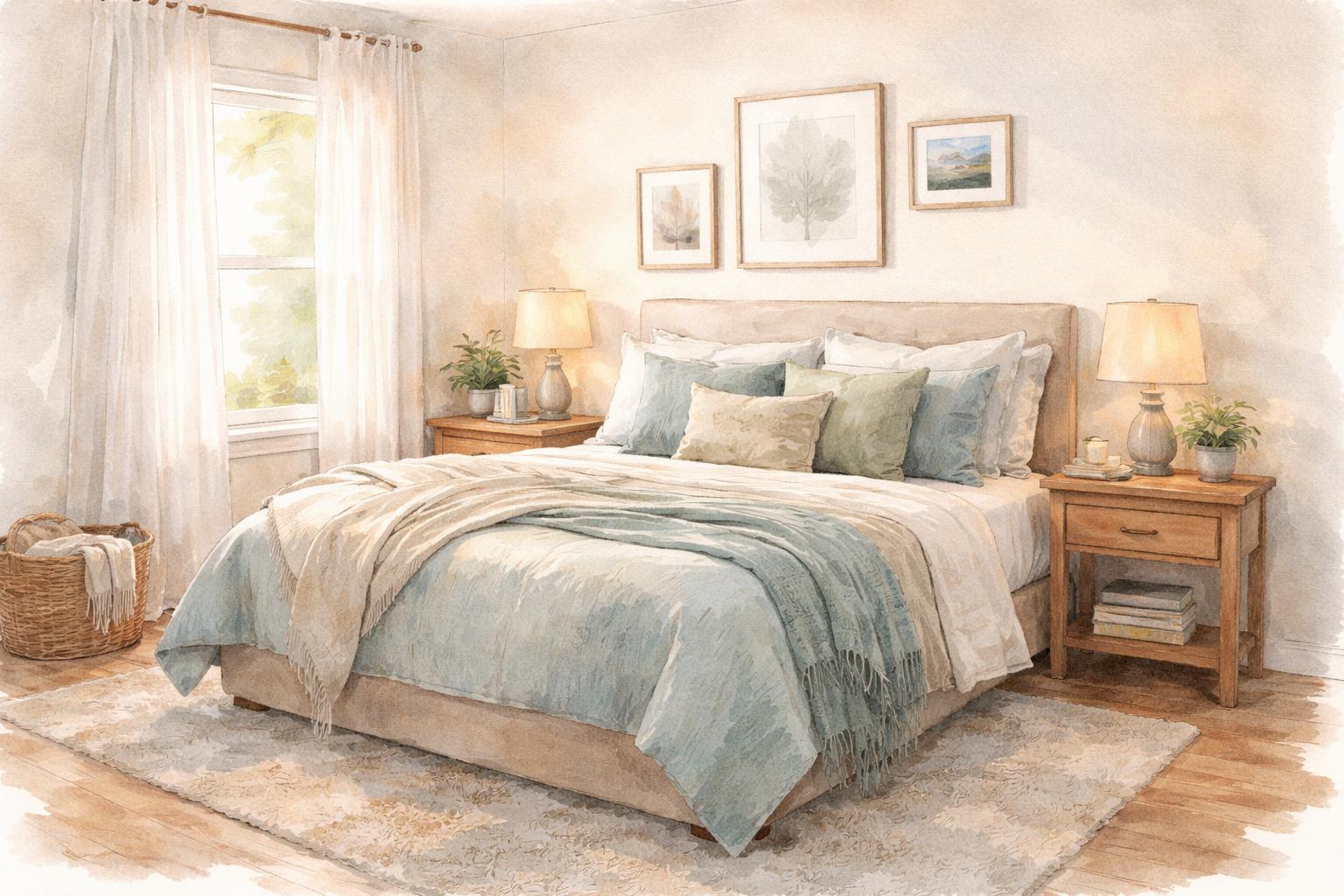
Your bedroom should reflect who you are through carefully chosen decorative elements and textures. Mixing patterns and textures[17] adds depth while bohemian touches create a relaxed, individualized atmosphere.
Incorporating Boho Style and Unique Accents
Boho style brings warmth and personality to a bedroom through eclectic combinations of natural materials and global-inspired pieces. Rattan furniture, macramé wall hangings, and woven baskets create texture while maintaining a relaxed feel. Layered textiles like vintage rugs and embroidered throw pillows add visual interest without overwhelming the space.
Plants are essential to boho interior design. Hanging planters with trailing pothos or a small collection of succulents on a nightstand bring life into the room. These natural elements work alongside earth-tone color palettes of terracotta, sage green, and warm neutrals.
Unique accents make the space feel truly personal. Displaying meaningful decor like travel souvenirs or handmade items[18] creates a lived-in quality that generic decor cannot achieve. A vintage mirror or carved wooden headboard serves as a focal point while reinforcing the bohemian aesthetic.
Mixing Patterns and Velvet for Depth
Velvet adds luxury and visual weight to bedroom decor through its rich texture and light-absorbing quality. A velvet throw pillow in jewel tones like emerald or sapphire creates a sophisticated accent against neutral bedding. Velvet curtains help block light while adding softness to windows.
Pattern mixing requires selecting designs that share a common color thread. Stripes pair well with florals when both contain similar hues. Start with two patterns in different scales—a large-scale floral with a smaller geometric print works particularly well.
The key is balancing bold patterns with solid colors. If the bedding features multiple patterns, keep the walls and larger furniture pieces in solid tones. This prevents the room from feeling chaotic while still adding character and depth[17] to the overall design.
Frequently Asked Questions
Creating a more relaxing bedroom doesn’t require expensive purchases or professional help. Small changes like rearranging furniture, using items from other rooms, and adjusting lighting can transform a bedroom into a peaceful retreat that promotes better sleep.
How can I make my bedroom feel more relaxing on a budget?
A person can create a more relaxing bedroom by tidying up and decluttering[9] first, which costs nothing and reduces stress. Moving picture frames, throw pillows, and decorative items from other rooms into the bedroom provides a fresh look without spending money.
Swapping out old light bulbs for soft white LED bulbs creates a gentler atmosphere. A person can also use sheets, tablecloths, or scarves to block out extra light from windows if blackout curtains aren’t available.
Fresh pillowcases make a big difference. Running them through the dryer for ten minutes or letting them air out with fabric refresher spray helps the bed feel cleaner and more inviting.
What are the best ways to make a bedroom more relaxing for better sleep?
Removing devices like phones and laptops from the bedroom at night helps create a retreat from stress and constant information. This separation allows the brain to associate the bedroom with rest instead of work or worries.
Making the bed each morning and climbing into a made bed at night helps create structure and signals the end of the day. A clean, organized space with minimal clutter on surfaces reduces visual stress and makes the room feel calmer.
Using lamps instead of overhead lighting provides ambient lighting that feels softer on the eyes. Keeping essentials like water, lip balm, and an eye mask on the bedside table prevents sleep interruptions from having to get up during the night.
How do I create a relaxing bedroom sanctuary with simple design changes?
Choosing calming colors[19] like soft blues or warm neutrals helps create a soothing atmosphere. A person can freshen up white walls with a Magic Eraser to remove marks and smudges, making the space feel cleaner without repainting.
Adding natural elements brings a sense of peace to the room. Fresh flowers on the bedside table, a marble bookend, or a collection of stones connects the space to nature.
Lighting candles with favorite scents before bedtime engages the senses and creates associations with relaxation. Soft textures like throw blankets and comfortable bedding make the physical environment more comforting.
How can I make my room cozy and aesthetic without buying anything new?
A person can walk through their home and gather items from other rooms to refresh the bedroom. Moving framed photos from the living room to the bedroom provides new views and personal touches.
Elevate Your Health for Just $29.99/Month
Join the Precision Wellness Subscription at My Healing 365 and get discounted services, priority coaching access, virtual care, and exclusive wellness resources to support your physical, emotional, and hormonal health.
Join for $29.99/MonthSwapping throw pillows and blankets from the couch to the bed changes the color scheme and texture without purchasing anything. Rearranging existing furniture can make the space feel completely different.
Using fabric items like scarves or pashminas as decorative elements adds softness. A person might drape them over a chair or use them to block light from windows.
What are some warm and cozy bedroom ideas that work in small spaces?
Layering soft textures creates warmth without taking up floor space. Throw blankets, plush bedding, and soft pillows add comfort in any size room.
If working from the bedroom, using a small side table and stool as a temporary desk keeps work separate from the sleeping area. Putting away the work setup at the end of the day maintains the bedroom as a relaxing space.
Strategic lighting makes small spaces feel cozier. Using table lamps or wall-mounted lights instead of harsh overhead fixtures creates a warmer glow without requiring extra floor space.
What is the 60-30-10 rule in bedroom design, and how do I apply it?
The 60-30-10 rule is a color distribution guideline where 60% of the room uses a dominant color, 30% uses a secondary color, and 10% uses an accent color. This creates visual balance and prevents the space from feeling chaotic or overwhelming.
A person would apply 60% of the dominant color through walls, bedding, or large furniture pieces. The secondary color at 30% appears in curtains, rugs, or upholstered furniture.
The accent color at 10% shows up in smaller decorative items like throw pillows, artwork, or accessories. This approach creates a cohesive look that feels intentional and calming rather than cluttered or busy.
Post Views: 6
References
- cozy bedroom. https://www.thespruce.com/cozy-bedroom-ideas-5078657 Accessed April 26, 2026
- Calming Bedroom Colors to Soothe Your Senses. https://camillestyles.com/design/room-ideas/bedroom/calming-bedroom-colors/ Accessed April 26, 2026
- 15 Bedroom Color Schemes for a Relaxing and Cozy Space. https://moderndecorhome.com/bedroom-color-schemes-for-relaxing-cozy-space/ Accessed April 26, 2026
- 15 Calming Bedroom Color Palettes Designers Swear By. https://everhomey.com/15-calming-bedroom-color-palettes/ Accessed April 26, 2026
- East-facing windows bring in morning light. https://www.marthastewart.com/how-to-maximize-natural-light-11713377 Accessed April 26, 2026
- 20 Clever Ways to Maximize Natural Light in Your Home. https://www.homeaswemakeit.com/20-clever-ways-to-maximize-natural-light-in-your-home/ Accessed April 26, 2026
- 15 Unique Ways to Let Natural Light Transform Your Interiors. https://homedecorbliss.com/ways-natural-light-transforms-interiors/ Accessed April 26, 2026
- Just a moment…. https://www.lightopia.com/bedroom-lighting-layers Accessed April 26, 2026
- Wrapping yourself in soft materials. https://www.housebeautiful.com/home-remodeling/interior-designers/a31932839/relaxing-bedroom-ideas/ Accessed April 26, 2026
- 59 Biophilic Bedroom Design Ideas That Bring Nature Indoors. https://my-inspo.com/59-biophilic-bedroom-design-ideas-natural-retreat/ Accessed April 26, 2026
- 15 Serene Bedroom Ideas for a Tranquil Retreat. https://tooltrip.com/15-serene-bedroom-ideas-for-a-tranquil-retreat/ Accessed April 26, 2026
- 15 Relaxing Bedroom Ideas for Peaceful Calming Retreats. https://firesidea.com/relaxing-bedroom-ideas/ Accessed April 26, 2026
- 15 Best Bedroom Organization Ideas of 2025. https://www.architecturaldigest.com/story/best-bedroom-organization-ideas Accessed April 26, 2026
- 25 Smart Bedroom Storage Ideas to Declutter Your Space. https://www.itsoverflowing.com/bedroom-storage-ideas/ Accessed April 26, 2026
- 15 Clever Bedroom Organization Hacks • Plan to Organize. https://plantoorganize.com/bedroom-organization-hacks/ Accessed April 26, 2026
- 15 Must-Try DIY Room Spray Recipes for Your Home. https://www.ouroilyhouse.com/homemade-room-spray/ Accessed April 26, 2026
- Easy Tips For Adding Personality To Your Bedroom ~ Fresh Design Blog. https://www.freshdesignblog.com/2023/08/easy-tips-for-adding-personality-to-your-bedroom/ Accessed April 26, 2026
- 15 Game-Changing Tricks to Make Any Room Feel Instantly Cozier. https://homedecorbliss.com/tricks-to-make-any-room-cozier/ Accessed April 26, 2026
- The Secrets to Designing a Relaxing Bedroom Retreat. https://www.metaformdesign.com/interior-design/the-secrets-to-designing-a-relaxing-bedroom-retreat/ Accessed April 26, 2026

























