
Medically Reviewed
Dr. Jose Rossello, MD, PhD, MHCM
Preventive Medicine & Public Health Specialist
Last Reviewed: April 26, 2026
Getting quality sleep affects everything from mood to physical health, yet many people struggle to fall asleep or stay asleep through the night. The good news is that simple adjustments to the bedroom environment can lead to better rest without expensive treatments or medications. Making specific changes to your sleep space can improve sleep quality in just a few nights by addressing the factors that keep your brain and body from relaxing fully.
The bedroom should work as a dedicated space for rest, not a multipurpose room filled with distractions. Small shifts in temperature, lighting, sound levels, and comfort can signal to the body that it’s time to wind down. These adjustments help support the natural sleep cycle and make it easier to fall asleep faster and wake up feeling refreshed.
Most sleep problems stem from an environment that works against the body’s natural rhythms rather than supporting them. By focusing on eight bedroom changes that actually help[1], anyone can transform their sleep space into one that promotes deeper, more consistent rest. These practical modifications address the core elements that research shows matter most for healthy sleep.
Table of Contents
Key Takeaways
- A dark, cool, and quiet bedroom environment helps the body produce melatonin and maintain sleep throughout the night
- Comfortable bedding and a supportive mattress keep the spine aligned and reduce pain that disrupts rest
- Consistent sleep schedules and calming bedtime routines train the brain to recognize when it’s time to sleep
Create a Calm and Clutter-Free Space
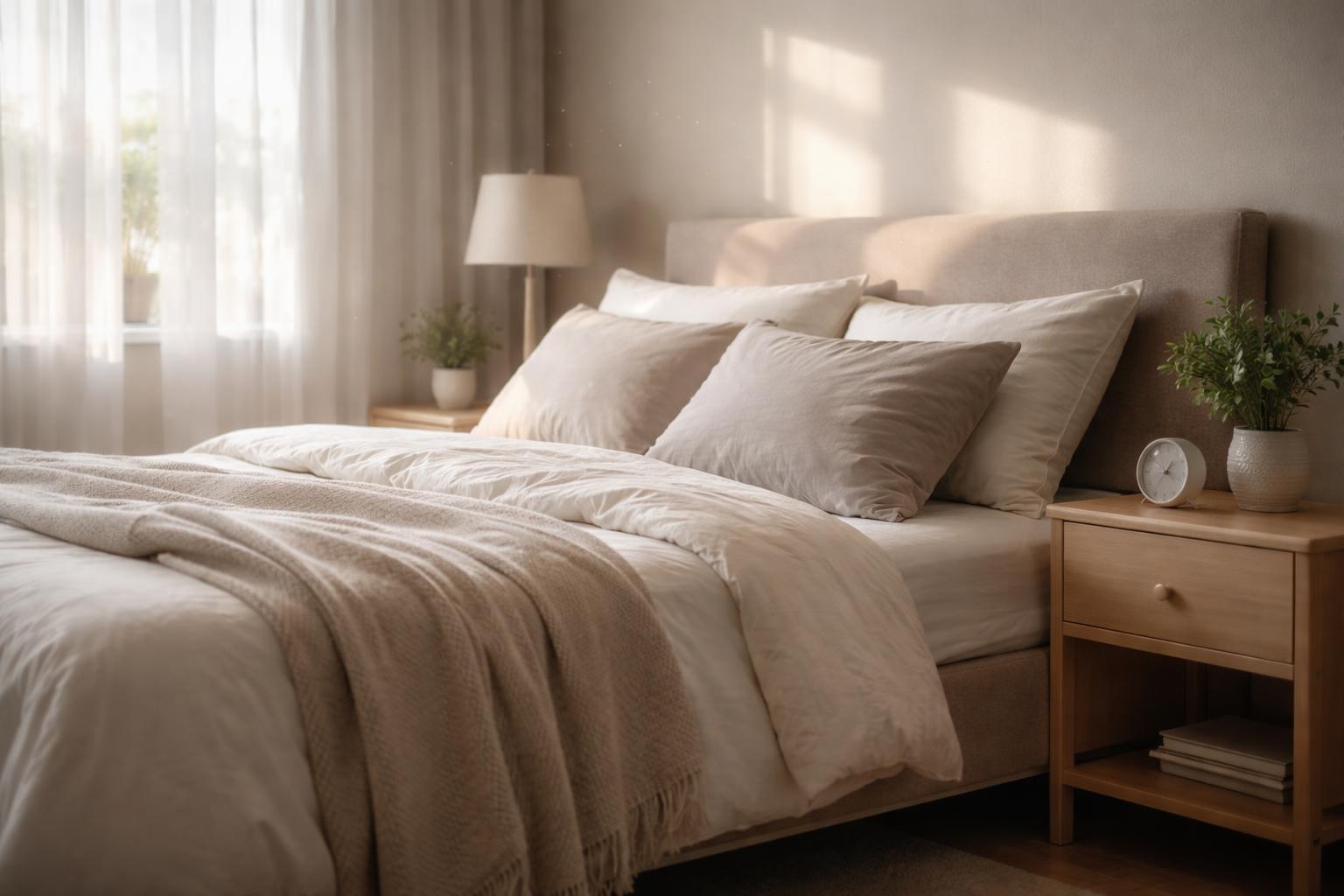
A messy bedroom can prevent quality rest by creating visual stress and mental distraction. Removing excess items and organizing what remains helps transform any bedroom into a sleep sanctuary that promotes relaxation.
Declutter the Bedroom
Visual clutter generates stress that makes it harder to relax at bedtime. Studies show that disorganized spaces can disrupt rest[2], while intentional bedroom layouts promote calm.
Start by removing items that don’t belong in the bedroom. Clothes piled on chairs, stacks of mail, and random objects scattered around create an overwhelming feeling. Take 10-15 minutes daily to put things away before they pile up.
Focus on surfaces first. Clear off the dresser, nightstands, and any chairs or benches. Keep only essential items visible. Store or donate items that haven’t been used in months.
Look under the bed too. This space often becomes a catch-all for boxes and miscellaneous items. Either clear it completely or use proper storage containers that keep things organized and out of sight.
Organize Nightstands and Surfaces
Nightstands should hold only what’s needed for sleep and the morning routine. A lamp, alarm clock, and perhaps a book or reading glasses are sufficient.
Remove these common clutter sources:
- Old receipts and papers
- Empty water bottles
- Charging cables for unused devices
- Expired medications
- Random jewelry or accessories
Use a small tray or drawer organizer to keep remaining items tidy. This creates a designated spot for essentials like reading glasses, lip balm, or earplugs.
Keep the top of the dresser minimal as well. Three items or fewer creates a clean look that supports better sleep quality.
Optimize Closet and Dresser Storage
Organizing drawers and closets[2] makes getting ready stress-free and keeps clothes from ending up on bedroom furniture.
Sort through clothes seasonally. Pack away off-season items to free up space. Donate anything unworn in the past year.
Use drawer dividers to keep similar items together. Socks, underwear, and accessories stay organized instead of creating messy piles. This simple change makes mornings easier and prevents drawers from overflowing.
Maximize vertical space in closets with double rods or shelf dividers. This approach keeps more items stored properly instead of scattered around the room. Under-bed storage containers work well for extra linens or seasonal clothing when closet space runs short.
Control Light Exposure for Deeper Rest
Light directly affects how quickly someone falls asleep and how well they stay asleep through the night. Blocking unwanted light and limiting blue light exposure in the evening helps the body produce melatonin naturally and maintains a healthy sleep-wake cycle.
Install Blackout Curtains or Shades
Streetlights, car headlights, and early morning sun can disrupt sleep even through closed eyelids. Light exposure affects circadian rhythm and melatonin production[3] even when eyes are shut.
Blackout curtains block 95-100% of external light entering through windows. These window treatments create darkness that signals the brain to maintain melatonin levels throughout the night.
Blackout shades offer a sleeker alternative that fits inside the window frame. They work well in bedrooms where curtains feel too heavy or bulky. Both options prevent early sunrise from cutting sleep short and keep the bedroom environment dark during daytime naps.
For maximum effectiveness, mount curtains or shades so they extend beyond the window frame on all sides. This prevents light from seeping in around the edges.
Reduce Blue Light Before Bed
Electronic devices emit blue light that suppresses melatonin production more than other light wavelengths. Phones, tablets, laptops, and TVs delay the sleep-wake cycle when used close to bedtime.
The best approach is removing screens from the bedroom entirely two to three hours before sleep. For those who must use devices, enabling night mode reduces blue light emission. Special glasses that filter blue light provide another option.
Dim the lights throughout the home as bedtime approaches. Low-wattage lamps with warm color temperatures help the body transition toward sleep. Bright overhead lights in the evening work against natural melatonin production.
Use Eye Masks and Block LED Lights
Small LED lights from alarm clocks, chargers, and electronics add up to significant light pollution in the bedroom. Covering or removing these devices creates better darkness for sleep.
A close-fitting eye mask blocks light when complete darkness isn’t possible. This solution helps when a partner wants to read or watch TV in bed. Quality eye masks sit comfortably without pressing on the eyes or shifting during the night.
Motion-activated night lights in hallways provide safety for bathroom trips without keeping the bedroom lit all night. These lights deliver low-level illumination only when needed rather than continuously disrupting the bedroom for sleep.
Optimize Bedroom Temperature and Air Quality
The right bedroom temperature and clean air work together to support deeper, more restful sleep. Most people sleep best in a cool room with fresh, filtered air and bedding that doesn’t trap heat.
Maintain Ideal Bedroom Temperature
The bedroom temperature should stay between 60 to 67 degrees[4] Fahrenheit for the best sleep quality. This range supports the body’s natural temperature drop that happens during sleep.
Many sleep experts recommend starting at 65 degrees Fahrenheit and adjusting based on personal comfort. A cool bedroom helps the body maintain its ideal core temperature throughout the night.
People can achieve this temperature range through several methods:
- Using air conditioning or opening windows during cooler months
- Running a ceiling fan or portable fan for air circulation
- Installing a programmable thermostat to maintain consistent temperatures
Breathable sheets and lightweight blankets help prevent overheating even when the room temperature is properly set. Those who tend to sleep hot should avoid heavy comforters and opt for layers they can remove as needed.
Add an Air Purifier or Houseplants
An air purifier with a HEPA filter removes dust, pollen, and other particles that can disrupt breathing during sleep. These devices work quietly in the background to keep bedroom air clean.
HEPA filters capture 99.97% of airborne particles as small as 0.3 microns. This includes common allergens that often interfere with sleep quality.
Certain houseplants also improve air quality naturally. The snake plant releases oxygen at night and removes toxins from indoor air. It requires minimal care and thrives in bedroom conditions.
Other beneficial bedroom plants include:
- Peace lilies
- Spider plants
- Boston ferns
Plants should be kept clean and watered appropriately to prevent mold growth. Two to three plants in an average bedroom provide noticeable air quality benefits.
Choose Breathable Bedding Materials
Breathable bedding made from natural fibers helps regulate body temperature and prevents moisture buildup. Cotton, linen, and bamboo sheets allow air to circulate and wick away sweat.
Egyptian cotton and percale weaves offer excellent breathability for hot sleepers. Linen sheets become softer with each wash and stay cool in warm weather.
The bedroom environment improves significantly when synthetic materials are replaced with natural ones. Polyester and microfiber trap heat and moisture against the skin.
Mattress protectors and pillow covers should also be breathable. Waterproof barriers made with cotton terry or bamboo surfaces protect bedding without creating a hot sleeping surface.
Invest in the Right Mattress and Supportive Bedding

Your mattress and bedding directly affect how well you sleep each night. A supportive mattress keeps your spine aligned, while quality pillows and sheets create a comfortable sleep surface that helps you fall asleep faster and stay asleep longer.
Select a Comfortable Mattress
A good mattress provides proper support for your body weight and sleeping position. Research shows that a new mattress can improve sleep and decrease stress[2] and back pain.
The ideal mattress should feel comfortable without being too soft or too firm. Side sleepers typically need a softer surface to cushion their shoulders and hips. Back and stomach sleepers usually require a firmer mattress to maintain proper spine alignment throughout the night.
Elevate Your Health for Just $29.99/Month
Join the Precision Wellness Subscription at My Healing 365 and get discounted services, priority coaching access, virtual care, and exclusive wellness resources to support your physical, emotional, and hormonal health.
Join for $29.99/MonthA mattress loses support over time, typically after 7 to 10 years of use. Signs that it’s time to replace your mattress include waking up with back pain, visible sagging, or feeling more rested when sleeping away from home.
When shopping for a mattress, test it for at least 10 to 15 minutes in your preferred sleeping position. Many brands now offer trial periods of 100 nights or more, allowing you to test the mattress at home before committing.
Upgrade to Spine-Supportive Pillows
Pillows prevent neck pain by keeping your head and spine properly aligned during sleep. The right pillow height depends on your sleeping position and shoulder width.
Side sleepers need a thicker pillow to fill the space between their ear and shoulder. Back sleepers should use a medium-height pillow that supports the natural curve of their neck. Stomach sleepers require a thin pillow or no pillow at all to avoid straining their neck.
Replace pillows every 1 to 2 years as they lose their shape and support. A simple test is to fold your pillow in half—if it doesn’t spring back to its original shape, it’s time for a replacement.
Choose Cotton Sheets and Weighted Blankets
Cotton sheets breathe well and help regulate body temperature during sleep. They wick away moisture and feel soft against the skin. Look for sheets with a thread count between 200 and 400 for the best balance of softness and durability.
Weighted blankets apply gentle pressure across your body, which can promote relaxation and reduce anxiety at bedtime. Choose a blanket that weighs about 10% of your body weight.
Wash your bedding weekly to reduce dust mites and allergens. Fresh, clean sheets create a more inviting sleep environment and can help you feel more relaxed at bedtime.
Minimize Noise and Build a Soundproof Setting

Unwanted sounds disrupt sleep cycles and prevent restorative sleep. Blocking noise through physical barriers, masking sounds with steady audio, or using personal protection helps create the quiet sleep environment necessary for deep rest.
Use White Noise Machines or Earplugs
A white noise machine creates consistent sound that masks disruptive noises like traffic, neighbors, or household activity. The steady audio helps the brain ignore sudden sounds that would otherwise trigger wake responses during sleep.
White noise works by producing all sound frequencies at equal intensity. This creates a blanket of sound that covers up jarring noises without being intrusive itself. Many sleepers find that white noise helps them fall asleep faster and stay asleep longer.
Earplugs offer a simpler solution for blocking unwanted sounds. Foam earplugs can reduce noise by 20 to 30 decibels when properly inserted. Wax or silicone options provide comfortable alternatives for side sleepers.
Best options for different situations:
- Light sleepers: Combine white noise with earplugs for maximum protection
- Shared bedrooms: Use earplugs to avoid disturbing partners with white noise
- Variable noise: White noise machines handle unpredictable sounds better than earplugs alone
Soundproof Windows and Doors
Sound travels through gaps under doors and through thin windows. Sealing the gap under bedroom doors[5] with rubber weatherstripping blocks noise from other rooms and hallways.
Hollow-core doors allow sound to pass through easily. Replacing them with solid-wood doors creates a physical barrier that stops more sound from entering the bedroom. The added weight and density of solid wood absorbs vibrations that carry noise.
Windows let in outside noise from streets, neighbors, and early morning activity. Installing heavy curtains reduces noise infiltration[6] while also helping to block light. Double-layer curtains made with dense fabric work better than single thin panels.
Door sweeps cost less than full door replacement and still provide meaningful noise reduction. These attach to the bottom of existing doors and create an instant seal against the floor.
Add Rugs and Thick Curtains
Hard floors reflect sound and allow footsteps and impacts to echo through rooms. Rugs muffle noise[7] by absorbing vibrations before they bounce off hard surfaces. Placing large area rugs in the bedroom and adjacent spaces reduces sound transmission.
Thick curtains serve double duty by blocking both sound and light. Heavy fabric absorbs sound waves that would otherwise bounce off walls and windows. The denser the material, the more effective the soundproofing becomes.
Layering provides better results than single solutions. A thick rug under the bed combined with heavy curtains on windows creates multiple barriers against noise. Curtains that extend from ceiling to floor cover more surface area and block more sound than short window treatments.
Effective placement strategies:
- Position rugs near doors and windows where sound enters
- Hang curtains as close to walls as possible to trap sound
- Use rug pads underneath for additional sound absorption
Establish a Consistent Sleep and Wind-Down Routine
Creating a predictable pattern for sleep helps the body recognize when it’s time to rest. A regular sleep schedule supports the circadian rhythm[8], while pre-bed activities signal the brain to prepare for different sleep stages including light sleep, deep sleep, and REM sleep.
Follow a Bedtime Routine
A bedtime routine serves as a signal that sleep is approaching. This routine should take between 5 to 30 minutes and remain the same each night.
Common activities include brushing teeth, changing into pajamas, and reading. The key is repetition. When the brain recognizes these steps night after night, it begins preparing for sleep automatically.
The routine should avoid screens and bright lights. Blue light from devices interferes with melatonin production. Instead, calming activities like light reading, listening to soft music, or preparing items for the next day work better.
Keeping the routine simple makes it easier to follow. Three to five consistent steps are enough to create the mental association between these actions and sleep time.
Maintain a Consistent Sleep Schedule
A fixed wake-up time[9] is the foundation of good sleep patterns. This applies to weekends and weekdays alike.
Going to bed and waking up at the same time every day strengthens the circadian rhythm. This internal clock regulates when the body feels alert and when it feels sleepy. A fluctuating schedule disrupts this natural pattern and makes falling asleep harder.
Most adults need seven to nine hours of sleep. Working backward from a set wake time helps determine the appropriate bedtime. If someone needs to wake at 6:30 AM and requires eight hours of sleep, they should aim for a 10:30 PM bedtime.
Small adjustments work better than drastic changes. Shifting sleep times by 15 to 30 minutes every few days allows the body to adapt gradually.
Incorporate Relaxation Techniques
Relaxation methods help activate the parasympathetic nervous system[10], which prepares the body for rest. These techniques reduce heart rate and calm mental activity.
Progressive muscle relaxation involves tensing and releasing different muscle groups. Start with the toes and work upward through the legs, abdomen, arms, and face. This practice reduces physical tension that can prevent sleep.
Deep breathing exercises also promote relaxation. Breathing slowly through the nose for four counts, holding for four counts, and exhaling for six counts helps slow the nervous system. Repeating this pattern for several minutes creates a sense of calm.
Meditation and mindfulness practices redirect attention away from racing thoughts. Even five minutes of focused breathing or guided meditation can shift the mind into a more restful state before bed.
Personalize and Enhance Your Sleep Sanctuary

Creating a calming bedroom for sleep involves choosing colors that promote relaxation, arranging furniture to reduce stress, and using scents that help the mind unwind naturally.
Choose Soothing Colors and Decor
The colors in a bedroom affect how quickly someone can relax at bedtime. Soft, warm tones work best for most people because they create a sense of calm. Blues, greens, and muted earth tones are popular choices for walls and bedding.
A person doesn’t need to repaint the entire room to change the color scheme. Adding colored throw pillows, blankets, or a new rug can shift the overall feel. Wall art in peaceful tones also helps create a relaxing atmosphere.
Visual clutter generates stress[2], which makes falling asleep harder. Keeping surfaces clear and organizing drawers reduces anxious feelings. A bedroom should feel welcoming with personal touches like family photos or meaningful objects, but these items should be displayed neatly rather than scattered around.
Select Functional Bedroom Layout
A cramped bedroom makes it difficult to feel at ease. The mattress should fit comfortably in the space without making the room feel tight. Using vertical shelving or storage under the bed frees up floor space and creates a more open feeling.
Every action in the bedroom should be frustration-free[2]. Organized drawers make morning routines easier. A clear path from the bed to the bathroom prevents tripping hazards during nighttime trips. These small bedroom upgrades reduce daily stress.
Furniture placement matters for both function and comfort. A nightstand within arm’s reach holds essentials like water or reading glasses. The bed should be positioned away from direct light sources and noise when possible.
Incorporate Aromatherapy and Calming Scents
Certain scents help the body prepare for rest. Lavender is one of the most studied essential oils for sleep improvement. Research shows that aromatherapy with essential oils such as lavender can promote relaxation[2] and improve sleep quality.
An essential oil diffuser disperses scent throughout the room. Other options include lavender spray on pillows or sachets placed in drawers. Chamomile and bergamot are also effective calming scents.
Pairing aromatherapy with other relaxation practices works well. Deep breathing exercises while inhaling calming scents signal the brain that it’s time to wind down. Some people combine scents with meditation before bed to establish a consistent sleep sanctuary routine.
Frequently Asked Questions

Making the right bedroom changes can transform sleep quality in just a few nights. The key factors include managing light exposure, maintaining cool temperatures between 60-71°F, reducing clutter, and choosing calming colors and textures.
What are the most effective bedroom changes to improve sleep quality quickly?
The four most impactful changes target temperature, light, noise, and mattress surface[11]. These environmental factors produce measurable improvements in sleep quality.
Blocking out light with blackout curtains helps regulate the body’s circadian rhythm. Complete darkness signals the brain that it’s time to sleep.
Lowering the bedroom temperature to 60-71°F prevents sleep disruptions. Excess heat interferes with the body’s natural temperature drop during sleep.
Removing electronic devices eliminates blue light exposure and mental stimulation. Screens disrupt circadian rhythms and make it harder to wind down before bed.
How should I arrange furniture in a small bedroom to make it feel more relaxing and spacious?
Choosing a mattress size that fits without feeling too snug prevents a cramped feeling. The bed should leave enough floor space to move around comfortably.
Using vertical space and underbed storage frees up floor area. This creates room for essential furniture like a nightstand while maintaining an airy atmosphere.
Creating a clear path from the bed to the bathroom eliminates tripping hazards. A stress-free bedroom layout[2] promotes comfort and relaxation.
Organizing drawers and reducing visible clutter makes daily routines easier. Visual clutter generates stress and reinforces anxious feelings that interfere with sleep.
Which lighting choices in a bedroom help you fall asleep faster and stay asleep longer?
Low color temperature lighting with reduced illuminance makes it easier to feel drowsy. Bright lights delay the body’s natural sleep signals.
Bedside lamps should emit warm, dim light rather than harsh brightness. This supports the transition from wakefulness to sleep.
Installing blackout curtains blocks exterior light from street lamps and early morning sun. Darkness maintains healthy circadian rhythm patterns throughout the night.
Avoiding screen time for one hour before bed prevents blue light disruption. Electronic devices activate the mind and suppress melatonin production.
What temperature, bedding, and fabric choices create the best sleep environment?
The ideal bedroom temperature ranges from 60-71°F. Most sleep experts recommend erring on the cooler side since excess heat disrupts sleep quality.
Breathable sheets help regulate body temperature throughout the night. Natural fabrics like cotton allow air circulation and prevent overheating.
Comfortable pillows keep the head and spine properly aligned[2] to prevent neck pain. The right pillow matches individual sleeping positions and body types.
A supportive mattress that meets personal firmness preferences reduces pressure points. Research shows a quality mattress decreases stress and back pain while improving sleep.
Regularly washing bedding keeps the bed feeling fresh. Clean sheets reduce dust and allergen buildup that can interfere with breathing during sleep.
How can I make a bedroom feel cozy and calm using a simple white color palette?
White and warm neutral tones create a sense of ease at bedtime. Softer colors promote relaxation better than bold or bright shades.
Layering different white textures adds visual interest without overwhelming the space. Combining smooth sheets with textured blankets and pillows creates depth.
Adding personal touches like meaningful photos or cherished objects makes the room feel welcoming. These items don’t need to be expensive or fancy to create a sense of home.
Accenting with a warm rug or wall art introduces subtle color variations. Small additions prevent an all-white room from feeling sterile or cold.
What is the 3-2-1 bedroom method, and how does it support better sleep?
The 3-2-1 method involves stopping eating three hours before bed, finishing work two hours before sleep, and turning off screens one hour prior to bedtime. This approach gives the body time to wind down properly.
Stopping food intake three hours early allows digestion to complete. Going to bed on a full stomach can cause discomfort and disrupt sleep quality.
Finishing work two hours before sleep lets the mind transition away from stressful thoughts. This buffer period helps separate productivity from rest.
Eliminating screens one hour before bed removes blue light exposure and mental stimulation. The brain needs time to relax without electronic device interference.
Post Views: 2
References
- Feng Shui Sleep Tips — 10 Bedroom Changes That Actually Help. https://www.mattressnut.com/feng-shui-sleep-tips/ Accessed April 27, 2026
- How to Design the Ideal Bedroom for Sleep. https://www.sleepfoundation.org/bedroom-environment/how-to-design-the-ideal-bedroom-for-sleep Accessed April 27, 2026
- Light & Sleep: Effects on Sleep Quality. https://www.sleepfoundation.org/bedroom-environment/light-and-sleep Accessed April 27, 2026
- Temperature and Sleep: Optimizing Your Bedroom for Quality Rest. https://pierrehealth.com/temperature-and-sleep-optimizing-bedroom-quality-rest/ Accessed April 27, 2026
- How to Soundproof a Bedroom: 7 Easy DIY Strategies. https://www.bobvila.com/articles/how-to-soundproof-a-bedroom/ Accessed April 27, 2026
- 14 Tips for How to Block Out Noise While Sleeping. https://amerisleep.com/blog/how-to-block-out-noise-while-sleeping/ Accessed April 27, 2026
- 15 Cheapest Ways to Soundproof a Room that Actually Work. https://soundproofly.com/how-to-soundproof-a-room-cheaply/ Accessed April 27, 2026
- Mastering Sleep Hygiene: Your Path to Quality Sleep. https://www.sleepfoundation.org/sleep-hygiene Accessed April 27, 2026
- Setting a Regular Sleep Schedule. https://www.thensf.org/setting-a-regular-sleep-schedule/ Accessed April 27, 2026
- Nightly Routine for Better Sleep: 13 Wind-Down Tips. https://www.whoop.com/us/en/thelocker/13-tips-to-create-a-nightly-routine-to-sleep-better/ Accessed April 27, 2026
- How to Set Up Your Bedroom for Better Sleep: 10 Changes That Work. https://www.mattressnut.com/how-to-set-up-a-bedroom-for-better-sleep/ Accessed April 27, 2026

























