Table of Contents
Puberty hormones first get produced during adolescence
False The main puberty hormones are oestrogen and progesterone for girls and testosterone for boys. “They are active in the womb during foetal development and in infancy in a phase called mini-puberty,” says Sasha Howard, clinical reader and honorary consultant in paediatric endocrinology at Queen Mary, University of London and Barts Health NHS trust.
“This is a vital period from two to six months of age, when the reproductive hormones are switched on and there’s a lot of hormonal activity stimulating the testicles in boys and ovaries in girls. We think this is in order to prime these organs for fertility in adult life. A three-month-old baby boy has blood testosterone levels as high as an adult man.” During this time, the testicles double in size and boys often have spontaneous erections, explains Howard. “In boys, mini-puberty is usually complete by six months, but in girls there’s usually a tail of activity until between one and two years old.”
There’s also a myth that boys aged four have a “testosterone surge”, which is often used to explain challenging behaviour, but Howard says there’s no evidence for this: “Between two and 10 years old, it’s very quiet in terms of reproductive hormones.”
Hormones are just a female issue
False “Hormones affect men and women equally. They are not just about women’s problems,” says Dr Saira Hameed, a consultant endocrinologist at Imperial College healthcare NHS trust and author of Signals: The Inside Story of Our Hormones. While women experience periods and menopause, in which hormones play a key role, men and women actually have the same hormones. “Women have testosterone; men have testosterone. Women have oestrogen; men have oestrogen,” says Hameed.
The main difference is that men have higher levels of testosterone and women have higher levels of oestrogen. “If I looked at some thyroid function blood test results, I couldn’t tell you whether it was a sample from a man or a woman – it’s the same with cortisol, insulin and blood sugar. If we put fertility to one side, there’s no gender specificity to hormones,” says Hameed.
Taking testosterone makes you aggressive
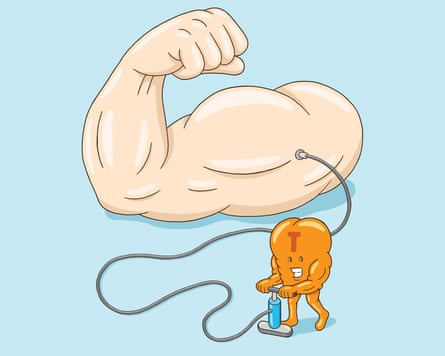
Mostly false “Testosterone should only be given to men whose levels are insufficient,” says Dr Channa Jayasena, a professor of reproductive endocrinology at Imperial College London and a consultant in the NHS and private sector. In this scenario, it’s “incredibly safe”, he says. “It does not cause aggression. In fact, it can improve people’s mood and their quality of life.”
The problems arise when it’s taken without medical guidance – for example, men who take anabolic steroids to build muscle mass. “They can be taking hundreds to thousands times more than they need. At that very high dose, testosterone affects the limbic system of the brain, which is associated with emotional processing and fear, and can trigger aggression,” says Jayasena.
Cortisol is a ‘bad’ hormone
False Cortisol is the body’s main stress hormone – your levels rise in stressful situations, such as an important meeting or an argument. Hameed refers to this as the “cortisol edge”, as it sharpens your thinking and makes you more alert. “All of that can be helpful, in the short term, so we don’t want to suppress it. But at the same time, we don’t want to run this chronic stress response,” she says.
If your cortisol levels are regularly high because of stress, rather than a medical reason, the best way to tackle it is to alleviate the stress, says Hameed. “Spending time with people you love, doing exercise, getting enough sleep, eating well – all of those things help. Buying a cortisol rebalancing tea will not.”
If your mum had a bad menopause, so will you
False When it comes to menopause, “women think their mother’s and sister’s experiences will be predictive of their own”, says Dr Gillian Goddard, an endocrinologist and an adjunct assistant professor at the NYU Langone hospital, and author of The Hormone Loop: Understanding Your Body from Puberty to Menopause and Beyond. But that’s not necessarily the case. “While genetics are probably the biggest factor in the timing of your last menstrual period, there’s a lot of person-to-person variability,” she says. “So just because your mother had a horrible experience with menopause, it doesn’t mean that you will too.”
You stop growing during puberty
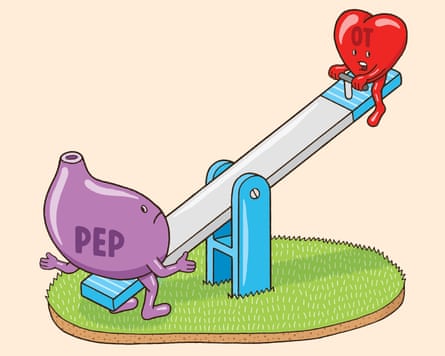
True “In both boys and girls, after a few years of puberty, there’s enough oestrogen around to close up the growing ends of the bones and stop you getting taller,” says Howard. For this reason, if you’re worried about your child’s growth, it’s best to seek advice sooner rather than later. “Most adult height is achieved before puberty,” says Howard. “So if, for example, you have growth hormone deficiency but don’t do anything about it until puberty, you have missed the chance to make much of an impact on adult height.”
Being overweight as a child can affect your hormones
True Data from the National Child Measurement Programme shows that in 2024‑25, 10.5% of children in reception and 22.2% of children in year 6 were obese. “There are clear links to earlier puberty timing for children who are overweight or obese in earlier childhood,” says Howard. “The hypothalamus [your brain’s primary control centre] is not set up to deal with a state of excess weight and this leads to inappropriate signals to start puberty early.”
You need to ‘balance’ your hormones
False “The body’s hormone levels are exquisitely calibrated,” says Hameed. “There are so many checks and balances in the system.” Goddard agrees: “I think people are confused about the fact that hormones fluctuate, and see this as a negative thing, but they’re fluctuating to keep our body in homeostasis.” This is the medical term for keeping things on an even keel. Goddard believes the idea of balancing your hormones comes from the world of supplements. “There’s not a lot of evidence that supplements have significant benefits from a hormonal point of view,” she says.
Testosterone only benefits men, and oestrogen only benefits women
False We think of testosterone as a male hormone and oestrogen as a female hormone, but “oestrogen plays an important role in male sexual function, and testosterone does in women”, says Jayasena. If a menopausal woman is taking oestrogen and progesterone but has a “persistently low libido”, the “addition of testosterone can increase libido”, he says.
In men, testosterone improves sexual function. “But part of the way the testosterone is working is by being broken down into oestrogen. Different tissues do it – your fat cells convert testosterone to oestrogen. But also in the brain and the bones.”
HRT is harmful
False In 2002, the Women’s Health Initiative – a US study on HRT – reported that breast cancer rates increased when taking it. This prompted scare stories in the media and led women to ditch their HRT. Various issues have since been uncovered with the study, including that it was focused on older women, rather than women in the early years of menopause, and it used older, synthetic methods of HRT.
But negative associations persist with HRT. “There’s a myth that HRT is dangerous,” says Dr Jan Toledano from the London Hormone Clinic. “There’s irrefutable evidence that HRT in the form that people are given it now – body-identical hormones that the body isn’t making any more – is like topping up your petrol tank with the right fuel. People don’t have to go on HRT if they don’t want to, but they shouldn’t avoid it because they’re nervous.”
Still, for certain groups, the NHS advise extra conversations with your doctor: people that have had breast cancer will usually be advised not to take it, and those susceptible to blood clots may be better off taking it in a patch, spray or gel form.
Women gain weight during menopause
True According to the British Menopause Society, weight gain is one of the most common side effects of perimenopause and menopause, affecting at least 50% of women. The reason? Your hormones. “Oestrogen tells our body to store fat in our hips and thighs. When oestrogen levels drop, we are more able to store fat in our midsection. This fat is metabolically problematic – it makes us insulin resistant and can predispose us to diabetes and heart disease,” says Goddard.
This type of fat changes how the body processes carbohydrates. “It becomes a cycle,” says Goddard. “We store carbohydrates as fat in our midsection, which makes us more insulin resistant, which makes us want more carbs, which makes us store more carbs as fat in our midsection.”
Also at this time, Goddard explains, women lose a “small but significant amount of muscle mass” – around half a kilo. This can have an impact because “muscle is metabolically very active” and burns calories in “a way that fat does not”. To counter this, she recommends strength training to maintain muscle mass. “It’s also helpful to reduce the carbohydrates in our diet, and increase fibre and protein. It’s important to reorient our thinking away from the number on the scales and toward a more holistic view of health that includes metrics like blood sugar, cholesterol and blood pressure,” she says.
Girls are starting puberty earlier
True For girls, puberty generally starts with breast development. “Once you form breast buds, the expectation is that your first period will be within two to two and a half years. The studies that look at girls going through puberty earlier show they enter puberty around a year earlier, but they’re only getting their first period about six months earlier. So puberty is getting longer,” says Goddard.
At the moment, there are only theories about why this is happening. “We see shifts in period timing going back to the 1850s,” says Goddard. “So at least initially, this was probably a result of the Industrial Revolution and better nutrition. Now, it may be that children who are overweight are producing more oestrogen earlier and that’s why they’re going through puberty earlier.” Another theory is that one of the “endocrine-disrupting chemicals that we’re putting into the environment – we’re not sure which – may be having direct activity on the hypothalamus and telling it to start puberty earlier”, says Goddard.
Elevate Your Health for Just $29.99/Month
Join the Precision Wellness Subscription at My Healing 365 and get discounted services, priority coaching access, virtual care, and exclusive wellness resources to support your physical, emotional, and hormonal health.
Join for $29.99/MonthMelatonin helps you stay asleep
False Melatonin is made by the pineal gland in your brain. It helps regulate your circadian rhythm, with levels rising at night. In the UK, you can only legally get melatonin supplements on prescription, whereas in some countries you can buy them over the counter. But it isn’t necessarily the answer to your sleep woes.
“People don’t always realise that different types of sleep disruption have different causes – that difficulty falling asleep is different from difficulty staying asleep or early waking,” says Goddard. “Melatonin signals to your brain that it’s time to wind down. It does not help people stay asleep.”

























