
Medically Reviewed
Dr. Jose Rossello, MD, PhD, MHCM
Preventive Medicine & Public Health Specialist
Last Reviewed: May 12, 2026
Getting a good night’s sleep depends on many factors, but one of the most important is often overlooked. The temperature of your bedroom plays a bigger role in sleep quality than most people realize. Too hot or too cold, and you might find yourself tossing and turning all night.
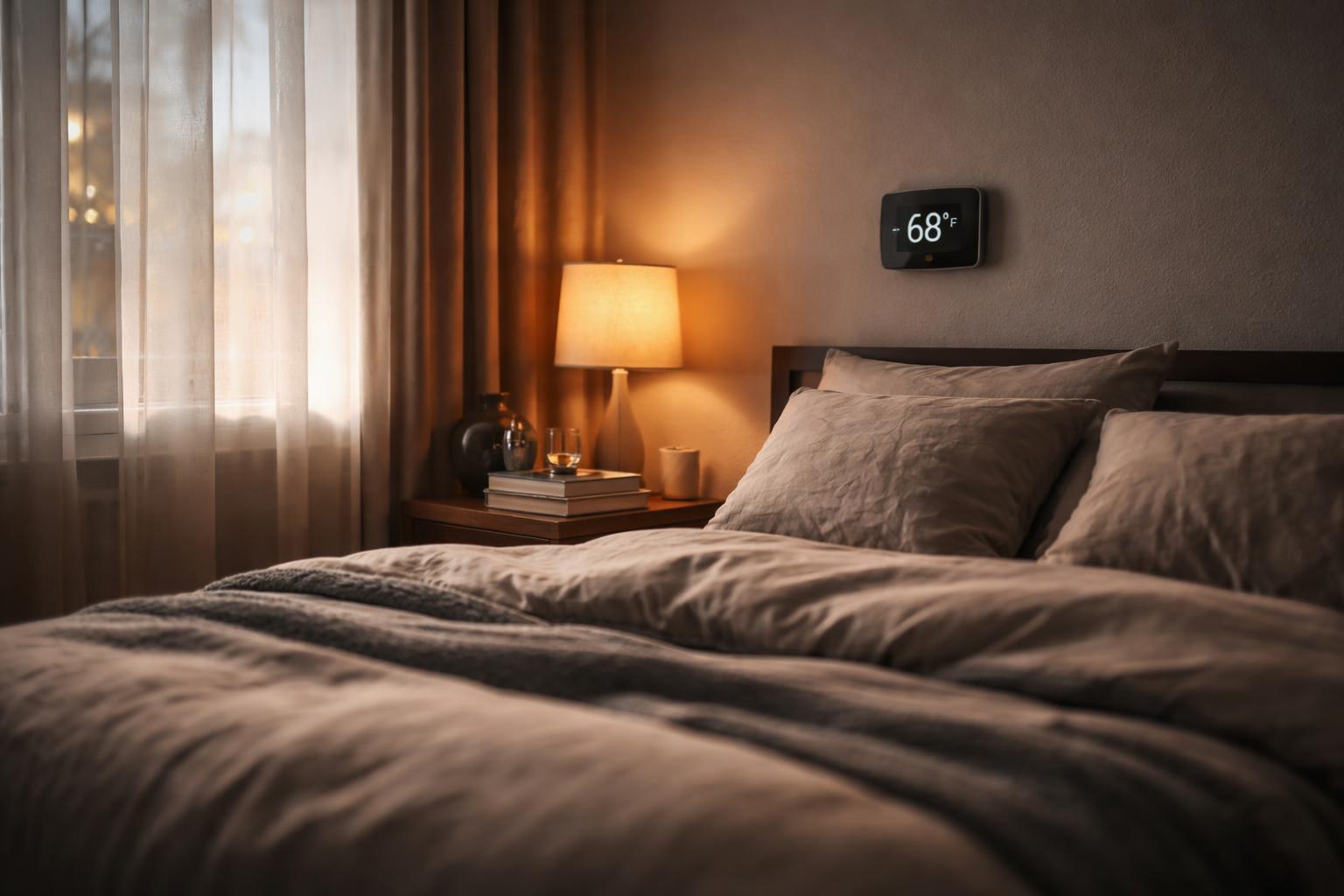
The ideal bedroom temperature for sleep[1] is between 65 to 68 degrees Fahrenheit, though this can vary by a few degrees from person to person. This temperature range helps the body’s natural cooling process that happens during sleep. When the bedroom temperature falls outside this range, it can disrupt sleep stages and leave people feeling tired the next day.
Understanding how temperature affects sleep can help anyone make simple changes for better rest. From adjusting the thermostat to choosing the right bedding, optimizing bedroom temperature[2] is one of the easiest ways to improve sleep quality. Small adjustments can make a big difference in how quickly someone falls asleep and how well they stay asleep throughout the night.
Table of Contents
Key Takeaways
- The best bedroom temperature for most adults is between 65 and 68 degrees Fahrenheit
- Room temperature directly affects how quickly people fall asleep and the quality of their sleep stages
- Simple adjustments like cooling bedding and lowering the thermostat at night can significantly improve sleep
Defining the Ideal Sleep Temperature
The best temperature for sleep[1] falls between 60 and 68 degrees Fahrenheit, though specific needs vary by age and individual factors. Understanding these ranges helps create an environment that supports the body’s natural cooling process during rest.
Recommended Temperature Ranges for Adults
Most adults sleep best when the bedroom temperature for sleep[2] stays between 65 and 68 degrees Fahrenheit. This range supports the body’s natural temperature drop that occurs during sleep.
The body’s core temperature decreases by about 2 degrees Fahrenheit throughout the night. This drop begins roughly two hours before bedtime and continues until the early morning hours. A cooler room works with this natural process rather than against it.
Some experts recommend setting the thermostat between 60 and 67 degrees Fahrenheit[3] for optimal rest. The precise ideal temperature within this range depends on factors like bedding materials, sleepwear, and individual metabolism. People who tend to sleep hot may prefer temperatures at the lower end of this spectrum, while those who feel cold easily might do better around 67 or 68 degrees.
Variation by Age Group: Infants and Older Adults
Infants need a slightly warmer sleeping environment than adults. The recommended temperature for babies[1] ranges from 68 to 69 degrees Fahrenheit, about one to two degrees warmer than adult recommendations.
Babies have smaller bodies that are still developing their temperature regulation systems. A room that is too warm increases the risk of sudden infant death syndrome. Parents should avoid heavy blankets and ensure their baby wears approved sleepwear designed for the room temperature.
Infants typically develop mature temperature regulation by around eleven weeks of age. At this stage, they begin reaching minimum core body temperatures similar to adults within four hours of bedtime.
Why Personal Preferences Matter
Individual differences play a significant role in determining the ideal sleeping temperature for each person. Factors like metabolism, health conditions, and hormonal changes affect how the body regulates heat during sleep.
Some people naturally run warmer or cooler than others. Women going through menopause may experience hot flashes that require a cooler room temperature. People with certain medical conditions or those taking specific medications may also have different temperature needs.
The key is finding a temperature that allows the body to cool down naturally without causing discomfort. If someone wakes up sweating or shivering, they should adjust their room temperature for sleep accordingly. Testing different settings within the recommended range helps identify the most comfortable temperature.
The Science of Temperature and Sleep Quality
Your body undergoes specific temperature changes throughout the night that directly affect how well you sleep. The process involves your internal clock, hormone release, and transitions between different sleep stages.
Body Thermoregulation at Night
The body maintains a core temperature around 98.6 degrees Fahrenheit during the day. About two hours before sleep, this temperature begins to drop by roughly 2 degrees Fahrenheit throughout the night.
The body cools itself through a process called vasodilation. The circadian clock signals blood vessels to increase blood flow to the hands and feet. This sends heat away from the core to the extremities.
Some people notice their hands and feet feel warm at bedtime. This is a normal part of the cooling process. People with chronically cold feet may struggle to fall asleep because this heat transfer process doesn’t work properly.
A cooler bedroom works together with these natural temperature changes[1] to signal that bedtime is approaching. The body needs to release heat efficiently to initiate and maintain sleep.
Role of Circadian Rhythm and Melatonin
The circadian rhythm controls the sleep-wake cycle based on environmental cues. Light exposure is the most significant factor, but temperature also plays an important role.
The suprachiasmatic nucleus in the brain acts as the body’s master clock. It responds to light, exercise, and temperature to regulate sleep timing.
The drop in core body temperature coincides with melatonin production[1], the hormone that promotes sleepiness. This release happens in the evening as the body prepares for rest.
When bedroom temperature aligns with the body’s natural cooling pattern, it reinforces the sleep signal. A room that is too warm interferes with this process and makes falling asleep more difficult.
Impact on Sleep Stages: REM and Slow-Wave Sleep
Temperature affects the amount of time spent in different sleep stages. A higher core body temperature reduces restorative slow-wave sleep[1] and decreases overall sleep quality.
During REM sleep, the body stops most temperature regulation behaviors like sweating and shivering. This makes sleepers more sensitive to room temperature during this stage.
Excessively hot temperatures reduce the time spent in REM sleep. This stage is critical for memory consolidation and learning.
A bedroom that is too warm creates a larger temperature difference between the core and extremities. This indicates the body cannot efficiently release heat, which leads to more nighttime awakenings and poor sleep efficiency.
How Room Temperature Impacts Sleep Performance
Temperature directly affects how well someone sleeps through the night. A bedroom that is too hot or too cold disrupts the body’s natural cooling process and interferes with sleep cycles.
Problems With Overly Warm Bedrooms
When a bedroom gets too warm, the body struggles to lower its core temperature for sleep. Sleep quality suffers in overly warm environments[1] because the body cannot complete its natural thermoregulation process.
High temperatures cause several specific problems. A warmer bedroom reduces the amount of restorative slow-wave sleep a person gets. It also decreases overall sleep efficiency and makes falling asleep harder.
Warm rooms can cause fatigue[1] where someone feels exhausted but unable to drift off. The body sends heat away from the core through increased blood flow to hands and feet. When room temperature stays too high, this cooling mechanism fails.
People wake up more frequently during the night in hot conditions. They may feel sweaty, dehydrated, and uncomfortable. These disruptions prevent the deep, uninterrupted rest needed for physical recovery.
Risks of Cold Sleeping Environments
Cold bedrooms create different challenges for sleep performance. While less harmful than excessive heat[1], cold temperatures still disrupt rest patterns and comfort.
A bedroom that drops too cold affects REM sleep stages. It can also impact blood pressure regulation during the night. People with chronically cold feet may struggle with sleep-onset insomnia because their bodies cannot redistribute heat properly.
Cold conditions force the body to work harder to maintain core temperature. This extra effort prevents full relaxation. Someone might also wake up shivering or feeling stiff and uncomfortable throughout the night.
Effects of Humidity and Air Circulation
Humidity levels change how temperature feels in a bedroom. The interaction between temperature and moisture[4] determines actual comfort during sleep.
High humidity makes warm temperatures feel even hotter and more oppressive. It prevents sweat from evaporating off the skin. Low humidity can dry out airways and make breathing uncomfortable.
Moderate humidity with proper temperature creates optimal sleep conditions[4] for most people. Good air circulation helps maintain consistent temperature and humidity throughout the space. Stagnant air allows hot spots to develop and makes the room feel stuffy.
Poor ventilation traps heat and moisture near the body. Opening windows or using fans improves air movement and helps regulate bedroom temperature for sleep more effectively.
Setting Up Your Bedroom for Optimal Temperature
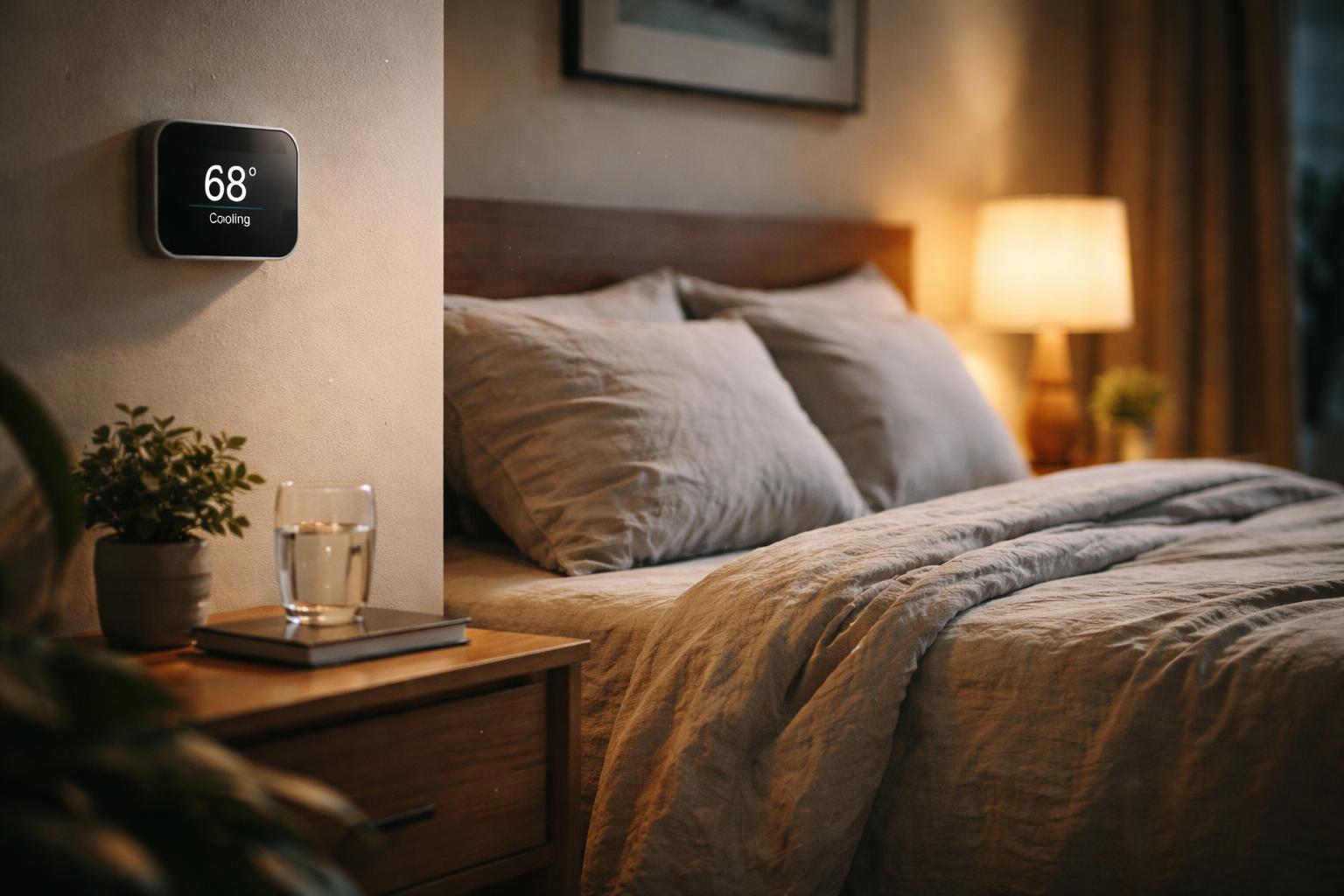
Getting the right bedroom temperature for sleep requires more than just adjusting a thermostat. People need to consider their heating and cooling systems, seasonal changes, and how their room accumulates heat throughout the day.
Thermostat Settings and Tech Solutions
The best room temperature for sleep falls between 60 and 67 degrees Fahrenheit[2]. Most people find their sweet spot around 65 to 68 degrees.
Smart thermostats make it easier to maintain consistent sleep temperatures. These devices can automatically lower temperatures at bedtime and gradually warm the room before wake time. Basic programmable thermostats work well too, as long as they’re set to drop the temperature about two hours before bed.
For those without central air, portable air conditioners or fans provide effective cooling. A ceiling fan set to rotate counterclockwise pushes cool air downward. Window units should be sized appropriately for the room—too small won’t cool effectively, while oversized units cycle on and off too frequently.
Space heaters help in winter but shouldn’t make the room too warm. The goal is to stay within the recommended sleep temperature range rather than creating a tropical environment.
Elevate Your Health for Just $29.99/Month
Join the Precision Wellness Subscription at My Healing 365 and get discounted services, priority coaching access, virtual care, and exclusive wellness resources to support your physical, emotional, and hormonal health.
Join for $29.99/MonthSeasonal Adjustments and Strategies
Summer requires different cooling strategies[5] than winter warming techniques. During hot months, people should close blinds and curtains during the day to block heat from building up. Opening windows at night when outdoor temperatures drop allows natural cooling.
Winter adjustments focus on preventing excessive heat. Moving to a lower floor helps since heat rises, making upstairs bedrooms warmer. A hot water bottle placed at the foot of the bed can provide localized warmth without overheating the entire room.
Spring and fall offer the easiest temperature control. Opening windows for cross-ventilation often maintains ideal conditions without mechanical heating or cooling.
Regulating Heat Build-Up and Cooling
Heat accumulation during daytime hours affects nighttime room temperature for sleep significantly. Keeping bedroom doors closed during the day when other rooms are warmer prevents heat transfer. Electronics and lights generate surprising amounts of heat, so turning them off well before bedtime helps.
Cooling bedding materials make a noticeable difference. Cotton and linen sheets breathe better than synthetic fabrics. Mattresses with cooling gel layers or breathable construction prevent heat retention.
A warm bath taken one to two hours before bed triggers a natural cool-down effect in the body. As core temperature drops after leaving the bath, it signals the body that sleep time is approaching.
Humidity control matters too. Levels between 30 and 50 percent feel most comfortable. Dehumidifiers help in muggy conditions, while humidifiers prevent dry air in winter.
Best Bedding and Sleepwear for Temperature Regulation

The right bedding materials and sleepwear can make a significant difference in maintaining comfortable sleep temperatures throughout the night. Materials like bamboo, Tencel, and silk offer natural cooling properties, while specific mattress and pillow designs help regulate body heat.
Choosing Cooling Bedding Materials
Natural and synthetic fabrics each offer unique temperature-regulating benefits. Tencel, silk, bamboo, and milk protein fibers[6] are among the most effective materials because they stay breathable and help maintain stable body temperature.
Bamboo sheets draw moisture away from the skin and allow air to circulate freely. Tencel provides similar benefits with a silky-smooth feel that many sleepers prefer. Cotton remains popular for its breathability, though it absorbs moisture rather than wicking it away.
High-quality microfiber and natural fabrics[7] prevent overheating through the night. Eucalyptus-based fabrics combine cooling properties with durability. Linen offers excellent temperature control in both warm and cool conditions, making it suitable year-round.
Thread count matters less than material type for cooling bedding. A lower thread count often allows better airflow than ultra-high thread counts that trap heat.
Selecting a Cooling Mattress
Modern mattresses incorporate various technologies to address heat retention issues. Memory foam mattresses traditionally trap body heat, but newer versions include gel infusions or copper particles to improve cooling.
Innerspring and hybrid mattresses naturally allow more airflow than solid foam options. The space between coils creates channels for heat to escape. Latex mattresses offer natural cooling properties while providing responsive support.
Some mattresses feature phase-change materials that absorb excess heat when body temperature rises and release it when temperature drops. These advanced materials help maintain consistent comfort throughout sleep cycles.
Mattress covers and protectors can either help or hinder temperature regulation. Breathable protectors made from moisture-wicking fabrics preserve the mattress’s cooling features without adding heat-trapping layers.
Cooling Pillows for Head Comfort
The head and neck generate significant body heat during sleep. A cooling pillow addresses this issue through specialized materials and designs.
Gel-infused memory foam pillows combine contouring support with heat-dissipating properties. The gel beads or layers pull heat away from the head and distribute it across the pillow surface.
Shredded memory foam or latex fills allow air to circulate better than solid foam blocks. Buckwheat hulls create natural air pockets that promote cooling, though they feel firmer than traditional options.
Some cooling pillows use water-based cooling systems or phase-change materials in the cover. Cotton and bamboo pillowcases enhance cooling effects by wicking away moisture and staying breathable against the skin.
Moisture-Wicking Sleepwear and Pajamas
Breathable bedding works best when paired with moisture-wicking sleepwear[5] to prevent overheating during sleep. The right pajamas transport sweat away from skin rather than holding it against the body.
Performance fabrics developed for athletic wear translate well to sleepwear. These synthetic materials pull moisture to the fabric surface where it evaporates quickly. Merino wool provides natural temperature regulation while wicking moisture effectively.
Loose-fitting pajamas allow air circulation around the body. Tight clothing restricts airflow and can cause overheating even in cool rooms. Lightweight fabrics work better than heavy materials regardless of season.
Cotton sleepwear offers basic breathability but absorbs and holds moisture. Bamboo and modal fabrics provide softer alternatives with superior moisture management. Some sleepers prefer sleeping without clothing to maximize cooling effects.
Expert Tips for Personalizing Your Sleeping Temperature
Finding the right sleep temperature involves more than just setting a thermostat. People can use natural cooling techniques, accommodate different preferences with a partner, and adjust daily habits to support better temperature regulation at night.
Natural Cooling Methods
Opening windows during cooler evening hours creates airflow that naturally lowers bedroom temperature without using electricity. This works best when outdoor temperatures drop below the ideal sleep temperature of 65-68°F[1].
Closing blinds or curtains during hot afternoons prevents heat from building up inside the bedroom. Rooms that stay shaded can be several degrees cooler by bedtime.
Taking a warm bath or shower 60-90 minutes before bed triggers the body’s natural cooling response. As the body cools down after warming up, it signals that sleep time is approaching.
Choosing breathable bedding materials like cotton or linen allows heat to escape more easily than synthetic fabrics. Moisture-wicking sheets pull sweat away from the skin to prevent overheating.
Using a fan creates air circulation even when the room temperature stays constant. The breeze helps evaporate moisture from skin and makes the room feel cooler.
Couples With Different Temperature Needs
Partners often disagree on the temperature for sleep[8] that feels most comfortable. Dual-zone electric blankets let each person control their side of the bed independently.
Layered bedding gives couples flexibility without changing the room temperature. One partner can use a lighter sheet while the other adds a comforter or duvet.
Separate blankets eliminate the tug-of-war over shared covers. Each person can choose the weight and warmth level they prefer.
A bedside fan pointed at the warmer sleeper provides targeted cooling without affecting the other person. This creates individual comfort zones within the same room.
Cooling or heating mattress pads offer temperature control for each side of the bed. These systems adjust warmth levels throughout the night based on personal preferences.
Lifestyle Habits That Impact Nighttime Temperature
Eating large meals close to bedtime raises body temperature as the digestive system works harder. Finishing dinner at least 2-3 hours before sleep helps the body cool naturally.
Exercise timing affects sleep temperature regulation. Vigorous workouts within 2 hours of bedtime can elevate core body temperature and make falling asleep harder.
Caffeine and alcohol both interfere with the body’s temperature control systems. Avoiding these substances in the evening supports more stable ideal sleep temperature[9] patterns.
Maintaining consistent sleep and wake times helps regulate the body’s natural temperature drops. The body learns when to start cooling down for sleep.
Staying hydrated during the day supports proper temperature regulation at night. Dehydration can disrupt the body’s cooling mechanisms.
Frequently Asked Questions

The best temperature for sleep[1] falls between 65 to 68 degrees Fahrenheit for most people, though specific needs vary based on age, season, and individual preferences.
What is the ideal bedroom temperature range for high-quality sleep?
The ideal bedroom temperature for quality sleep ranges from 65 to 68 degrees Fahrenheit (18.3 to 20 degrees Celsius). This temperature range supports the body’s natural cooling process that occurs during sleep.
Most sleep experts recommend keeping the thermostat within this range. Going a few degrees cooler or warmer may work for some people, but staying within these boundaries typically produces the best results.
What bedroom temperature is recommended for adults, and does it vary by age?
Adults sleep best when their bedroom stays between 65 and 68 degrees Fahrenheit. This range remains fairly consistent across different age groups in adulthood.
Older adults may prefer slightly warmer temperatures due to changes in circulation and body temperature regulation. However, the standard 65 to 68 degree range still applies to most adults regardless of age.
What temperature should a bedroom be in winter to stay comfortable without overheating?
During winter months, the bedroom should remain at 65 to 68 degrees Fahrenheit even though it feels cold outside. Many people make the mistake of turning up the heat too high at night, which can disrupt sleep quality.
Temperature affects sleep quality[2] significantly, and overheating a bedroom in winter creates the same sleep problems as a hot summer night. Using extra blankets or warmer pajamas helps maintain comfort without raising the room temperature.
What temperature should a bedroom be in summer to support cooler, deeper sleep?
The bedroom should stay at 65 to 68 degrees Fahrenheit during summer nights. This may require running an air conditioner or using fans to combat outdoor heat.
Opening windows at night when outdoor temperatures drop can help cool the room naturally. Closing blinds during the day prevents heat buildup that makes cooling more difficult at bedtime.
What is the recommended sleeping room temperature in both Celsius and Fahrenheit?
The recommended sleeping temperature is 65 to 68 degrees Fahrenheit[1], which converts to 18.3 to 20 degrees Celsius. This narrow range provides the optimal environment for the body’s natural temperature drop during sleep.
Some sources cite the ideal temperature as approximately 65 degrees Fahrenheit or 18.3 degrees Celsius specifically. Staying within a few degrees of this target supports better sleep quality.
What is the recommended sleeping room temperature in both Celsius and Fahrenheit?
The recommended sleeping room temperature is 65 to 68 degrees Fahrenheit, which equals 18.3 to 20 degrees Celsius. This temperature range works for most adults seeking quality sleep.
Maintaining this specific range helps the body regulate its core temperature effectively. The slight cooling effect signals to the body that it’s time for rest.
What bedroom temperature is considered safest and most comfortable for a baby?
Babies need a slightly warmer bedroom than adults, with temperatures between 68 and 69 degrees Fahrenheit (20 to 20.5 degrees Celsius) considered safest. Their smaller bodies and developing temperature regulation systems require this extra warmth.
A bedroom that is too warm increases the risk of sudden infant death syndrome (SIDS). Parents should avoid using blankets and instead dress babies in approved sleepwear designed for the room temperature.
Post Views: 19
References
- The Best Temperature for Sleep. https://www.sleepfoundation.org/bedroom-environment/best-temperature-for-sleep Accessed May 15, 2026
- The Best Temperature for Sleep. https://health.clevelandclinic.org/what-is-the-ideal-sleeping-temperature-for-my-bedroom Accessed May 15, 2026
- between 60 and 67 degrees Fahrenheit. https://www.womenshealthmag.com/health/a68130413/best-temperature-for-sleep-according-to-doctors/ Accessed May 15, 2026
- Can Room Temperature and Humidity Affect Sleep?. https://molekule.com/blogs/all/bedroom-temperature-humdity-sleep Accessed May 15, 2026
- Temperature and Sleep: Optimizing Your Bedroom for Quality Rest. https://pierrehealth.com/temperature-and-sleep-optimizing-bedroom-quality-rest/ Accessed May 15, 2026
- Thermo Regulation in Bedding. https://www.spreadhome.com/blogs/news/thermo-regulation-in-bedding Accessed May 15, 2026
- Temperature Regulation: Uncovering Optimal Bedding Materials for Restful Nights. https://www.bargainsheets.com/blog/temperature-regulation-uncovering-optimal-bedding-materials-for-restful-nights Accessed May 15, 2026
- The Ideal Temperature Zone: How to Achieve the Optimal Bedroom Climate. https://www.leesa.com/article/ideal-bedroom-temperature-optimal-sleep-climate Accessed May 15, 2026
- This is the best temperature for sleep, according to science — Calm Blog. https://blog.calm.com/blog/best-temperature-for-sleep Accessed May 15, 2026

























