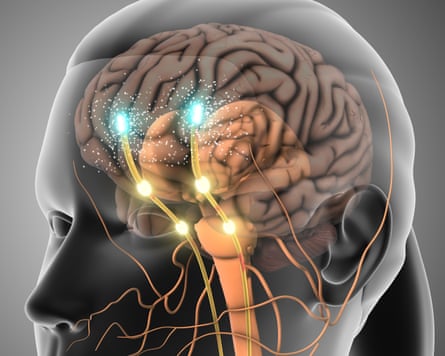
The runner’s high, where pavement-pounding drudgery turns into something like a chemically enhanced experience, is an elusive state to pin down. Some people seem to get it during most of their runs; others rarely, or barely at all. A few lucky Couch to 5kers claim to experience it within their first few sessions, while some professional athletes doubt that it even exists. This is partly due to individual differences in brain chemistry, and partly because the way you train has a significant effect on how likely you are to experience it.
If you’re on the verge of throwing away your trainers, though, there’s good news: runner’s high is real, and there are ways to maximise your chances of experiencing it, even if you’d rather hit the pool or the river than the trail. On your marks, then …
Let’s start by tackling the common misconception that it’s all about endorphins. “The runner’s high seems to be caused by an orchestra of neurochemical changes across several brain systems, including the opioid system – of which endorphins are a part – and the endocannabinoid or eCB system,” says Dr Daya Grant, a neuroscientist and mental performance consultant. “While endorphins are certainly involved, they don’t seem to be the main drivers of the runner’s high; that central role belongs to the eCB system.”
To explain this a bit more, endocannabinoids are essentially the body’s internal version of the compounds found in cannabis, produced to help you manage pain and forget stressful events, and stop your brain cells getting overexcited to the point of damage. The eCB system wasn’t discovered until the 1990s, after the idea of the runner’s high was first discussed – which is the main reason the endorphins theory took hold. But more recent research (on animals) suggests that endorphins cannot pass through the blood-brain barrier. Endocannabinoids can, and seem to be the main mechanism for crucial aspects of the experience.
“Endocannabinoid levels increase during moderate to vigorous running efforts and stay elevated for approximately 30-45 minutes post run,” says Grant. “ECBs are particularly involved in two key features of the runner’s high: euphoria and anxiolysis, which is reduced anxiety. They’re also involved with pain modulation, mood enhancement, stress resilience and altered time perception, the latter of which is also a key feature of the flow state.”
This brings us to another key clarification: the flow state – most simply defined as the point at which we’re fully immersed in an activity where our skills match the level of challenge we’re experiencing – is technically a different thing from the runner’s high. They often occur together, and seem to involve some similar changes in the brain – for instance, temporarily reduced activation in areas of the prefrontal cortex that deal with self-focused thoughts such as “I’m tired” or “I’m probably not running fast enough”. But they can also be experienced independently of each other, and occur as quite different sensations.
“Sometimes we have a sense that a runner’s high needs to be a state of euphoria, whereas flow is more like the state where our body and mind feel at one, and we might be less aware of any fatigue or discomfort we’re feeling,” says Dr Trish Jackman, associate professor in sport and exercise psychology at the University of Lincoln. “A big element of that is that you’re performing at a level where you’re being challenged, but not too far outside your comfort zone.”
There are also other neurochemical changes to consider. Alongside eCBs, dopamine – sometimes known as the “feelgood” hormone – increases during long runs, typically peaking around the 60-minute mark, enhancing our cognition and motivation. Norepinephrine, a hormone that drives our body’s fight-or-flight responses, rises significantly as we approach our maximum anaerobic threshold (for instance, during interval training), helping you to stay focused and alert. Put together, all of these different effects can help us to feel good during all sorts of workouts – without the sort of crash you’d typically expect from more external sources of stimulation.

So why do we get the runner’s high, and how can we maximise our chances of feeling it? “One theory is that the human brain might have evolved to reward us for productive effort – the kind that results in food, safety or social status – rather than simply physical exhaustion,” says Dr Grant. “Our ancestors had to persist through discomfort and fatigue in order to find food and shelter, and so it makes sense that our brain would evolve to reward us for a challenging effort that was necessary for our survival. In general, sustained, moderate-to-hard aerobic effort seems to trigger the runner’s high most reliably. High-intensity interval training can produce the same neurochemical changes, but it won’t always lead to the more subjective feelings of euphoria and decreased anxiety.”
Other elements of the high are tougher to pin down. Norepinephrine, for instance, “seems to be context dependent: it’s higher when stress is high, such as during competitive races versus noncompetitive runs,” says Grant. There’s little real evidence that the location of a run amplifies the neurochemical effects, but exercising in nature has other well-documented benefits for psychological wellbeing, and is probably helpful for other reasons.
“Personally, I find treadmill running difficult, but some people really like it,” says Jackman. “One benefit of running on trails is that there’s an element of play that comes into it, that, as adults, we often don’t experience – jumping over tree roots or navigating your way through rough terrain, which physically is really good for you.” Making runs more challenging in this way (as opposed to speeding up or slowing down) might also help with accessing flow states – as can ignoring your planned pace and simply going with what feels manageable.
Elevate Your Health for Just $29.99/Month
Join the Precision Wellness Subscription at My Healing 365 and get discounted services, priority coaching access, virtual care, and exclusive wellness resources to support your physical, emotional, and hormonal health.
Join for $29.99/Month
At this point, it’s also worth saying that the runner’s high – or something like it – has been documented in cyclists, while rowers have reported similar effects (though that study suggests that endorphins are at play). One explanation for its rarity in other sports is that it’s rarer for fair-weather athletes to achieve the sort of sustained, moderate-intensity efforts that make feeling the runner’s high most likely – if you’re putting in bursts of effort and then cruising, such as when you pedal hard to get up a hill and then freewheel down, you’re less likely to get into the right zone. Similarly, if you’re doing interval training, you might not hit the sweet spot for a proper runner’s high, as you thrash yourself and then rest. One reason that some pro athletes rarely (or never) experience the state is that they’re often working at the top-end speed or putting in lots of easy miles – often going too fast or too slow to really get into the zone.
So is there any evidence that regularly achieving a runner’s high can help get us “addicted” to exercise? “There’s certainly evidence that running can alter the structure of the brain over time – for instance, by increasing the volume of the hippocampus, which is involved with learning and memory – but I’m not sure there’s any direct evidence linking repeated runner’s high episodes with changes in brain structure,” says Grant. “What I would say is that running, in general, builds our stress resilience. And when we repeatedly experience the runner’s high, we may train our brain to associate the effort of running with that, which then enhances our motivation to keep running.”
As for why some people never seem to experience the high at all, that’s still a contentious question. One leading theory is that some people have enzymes that “clear up” the endocannabinoids produced during exercise too fast for them to have a noticeable effect.
It’s worth noting, though, that plenty of people never feel the high but learn to love running all the same – for the little wins, entering the flow state and the sense of achievement it provides. Like a half-marathon medal, it’s nice when you get it. But it’s not the only reason to run.

























