
I met my wife in Queensland in 2001. She’s from Bern, but was in Australia to study marine science. She needed help collecting fish for her project, and had heard that I was handy with a spear gun. We hit it off straight away, and began our romance on semi‑deserted islands near the Great Barrier Reef.
We went on to make a life together. My wife liked Australia and eventually got citizenship, but after we had our first son she wanted to be near her family.
I’d been up for the move, but Switzerland didn’t work out for me at all. I was finishing off my PhD, about Australian wildfires, with 25cm of snow on the ground outside, and trying to start my career. From 40 applications, I got maybe two interviews. It was pretty demoralising.
After six months, my wife and I agreed that I should start applying for jobs in Australia. I immediately landed an awesome position in Sydney, moved to the beach and went surfing every day before work. My wife and son joined me six months later, and we had our second child.
For me, our life in Australia was perfect, but it was a tough time for our relationship: my wife didn’t want to be there. After nearly three years, I applied for a really good job in Zurich – and got it. The thought struck me like a lightning bolt, “Holy fuck … now what?”
We left Sydney on a lovely summer’s day of 38C, and landed in the depths of Swiss winter at -23C. It was quite the jump. I’d imagined we’d keep going back and forth, but it became clear that my wife was in Switzerland for the long haul, and you can’t just uproot kids all the time.
When I’d mention going back to Australia, or not being happy here, my wife would roll her eyes, get angry or switch off. It became a real thorn in our side, wiggled painfully at every dinner party: whenever someone learned I was Australian, they’d ask why I was here. There’s only one reason why an Australian would live in Switzerland, and that’s love.
Elevate Your Health for Just $29.99/Month
Join the Precision Wellness Subscription at My Healing 365 and get discounted services, priority coaching access, virtual care, and exclusive wellness resources to support your physical, emotional, and hormonal health.
Join for $29.99/MonthI’m well integrated in Switzerland now; speak the languages, have the passport. Professionally, it’s been great, but the place just doesn’t suit me. I’m pretty gregarious – people here are closed off and there are strict social norms. My humour goes down like a lead balloon. I find the seasons an emotional rollercoaster. Every winter it just gets worse.
My wife and I are now separated. I think ultimately our different desires for the future put the kibosh on our relationship, but my state of mind was definitely a factor. Realistically, Swizzo’s just not my cup of tea. I’m ready to move back to Australia, or at least somewhere with sun, but I’ve told myself I’ll stay here until the kids have finished studying.
If I was more of a forward planner maybe I would have dated an Aussie surfer girl. At first my wife and I were attracted to each other’s differences and independence, but we ended up being pulled in different directions.
My parents are both from Sydney, but my dad thought crossing the harbour was a barrier to their relationship. When I got together with my wife, he said we were a “total geographical impossibility”. In many ways he was right.
Table of Contents
‘I’ve met people through the school, but I still feel alone much of the time’
I moved from Argentina to London when I was 26. I loved it so much I stayed for 15 years. In 2016, I got together with my partner after he’d separated from his wife. He had three children and lived in a small town near Granada. We’d meet up every two weeks and spend every possible moment together.
When I got pregnant, we decided to move to Spain. I could work from anywhere; my partner couldn’t. Brexit sped up the decision. At the time, I felt very positive. I remember thinking geography shouldn’t get in the way of a good relationship. I’d moved countries before and spoke the language. Why not?
Our mistake was buying a house in a rural area. We have three neighbours, whom I hardly ever see, and I have to get in a car to go anywhere. After 15 years in a city, it’s very isolating. I hoped to meet other new mothers, but here they depend on the family. I’m not very good at breaking the ice, and most adult activities happen late when I’m at home with our daughter.
It’s easier to move countries on your own, as I did when I was younger – you’re more flexible and open, and you’re doing it for yourself. My English friends say, “How can you complain about Spain?”, but living here is not like being on holiday. After 360 days of sun and five months of minimum 35C, I’ve become obsessed with clouds.
It’s been a bit of a sore point with my partner. Early on, I’d make what I thought were little comments, about the heat and how Spaniards don’t use their indicators. Two or three years in, he said: “You have to stop doing that.” And fair enough – we both know I have to try to figure it out.
We’re fortunate to have a good, communicative relationship. It’s not easy vocalising these thoughts, where we know we disagree, but it’s a necessity: if we don’t, it won’t work. This will be my sixth year here. Our daughter is now six, and I’ve met people through her school, but I still feel alone much of the time. My partner’s friends are great, but they’re not my friends.
He knows I don’t want to retire and die here. We’ve talked about moving in five to 10 years, possibly to north Spain, which would be a little more climate-friendly. A city would be better, or even a town. But Spain just doesn’t feel like home. I’m trying to make the best of it. Some days are better than others – I’m thinking of it as a long visit.
‘I need art, culture, exotic food, to be able to step out of the house and meet a friend at a bar’
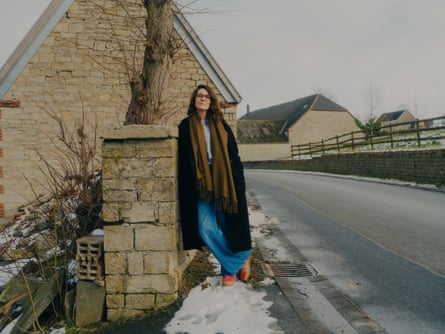
I met my now-husband while on holiday abroad in 2016. Neither of us was looking for a relationship, but there were weird commonalities between us: we were both going through divorce earlier than most people, and when he was a kid he’d been on an exchange from Germany to my home town in Yorkshire. We became Facebook friends and got chatting, then met up a few times in Germany and the UK.
My husband had a six-year-old from his previous marriage so where we’d live was not negotiable, but I wanted a fresh start. I found a job and moved to Dortmund. We’d only known each other for six months, but after my previous relationship I’d learned to trust my gut.
The first year was hard. My husband works abroad a lot, so I was often home alone. I didn’t know what anything was at the supermarket, or how to get cash out. My husband had to come with me to every doctor’s appointment and visa meeting – I felt like a child. I remember thinking, “What the hell have I done?”
I was also having to navigate a stepchild who didn’t speak English, as a stepmum who didn’t speak German. Even with my husband, I’d get confused as hell by the cultural differences, but our relationship was great and it was just so nice to be anonymous in a new city. Eventually, I made friends through international networking groups.
In 2018, we had our first child. I was finding my way in the city with a baby and a language barrier. We needed support, so I suggested we move to my husband’s home town, where he had family and a house he was renting out. We had our second son soon afterwards.
Moving there was even more of a culture shock. It’s a very tight-knit, traditional community. Families have been here for hundreds of years – even if you come from elsewhere in Germany, you’re foreign. It’s also quite rural and can be extremely boring. There are things to do, but they’re just not my thing, or they’re a 45-minute drive away.
I’ve made friends, mostly other foreigners who I’ve found to be much warmer and more welcoming than the locals. I miss little interactions, such as having a chat at the supermarket. Here, your shopping just gets thrown at you. When I last visited the UK, I spent 15 minutes talking to the parking attendant.
This place has never felt like home to me. My husband knows everyone, and our kids are basically German. I’m still a foreigner; the mother with an accent. Sometimes I get quite upset, coming back after a business trip, or if someone laughs at my pronunciation. Once or twice a year I’ll have a complete meltdown.
My husband listens to me vent, and doesn’t judge, though he does sometimes remind me that it was my decision to come here. But, as the kids get older, I find myself thinking, “What am I doing here?” I need more input: art, culture, exotic food, to be able to just step out of the house and meet a friend at a bar.
I’ve told my husband I’m not staying here for ever, but you have to look at what’s best for your family. There’s nowhere better than Germany for quality of life, and it is getting easier – I can’t remember the last time I had a meltdown.
‘She’s used to the parties at 2am, the shower pressure being a dribble – I can’t stand it’
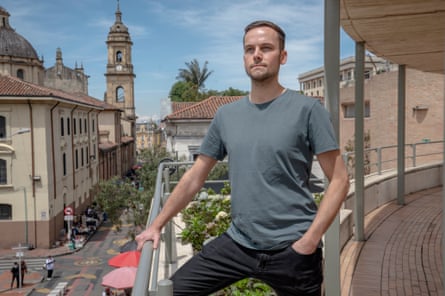
In late 2023, a friend and I booked a trip to Colombia. On our first night in Bogotá, we went to a bar and I met Laura, an English teacher. We spent the night glued to each other, dancing and talking. As I travelled around Colombia, we stayed in touch on Instagram. I just felt I’d found someone special. I even changed my flights home to spend a few more days with her.
Back in Canada, we spent hours video-calling, at least twice a week. I returned to Colombia a few months later and we spent two weeks travelling together in the Amazon. That was when we both knew this was real. It was like people always say: you just know.
I made a few more trips in 2024, but Laura’s visa to visit Canada was refused twice. We even looked into moving to the UK together. With no other path forward, I moved to Bogotá in March 2025. Laura and I got an apartment together, and two months later we got married.
It was a big leap, but I didn’t see it that way. I knew the relationship was special and that we’d make it work.
Bogotá was exciting, but I was out of my element. The city is intense: people everywhere, noise, so much stimulus. Music played outside our apartment from 7am to 5am every day. That’s just the culture, but I was overwhelmed.
I’d planned to find remote work, but there wasn’t much going, and the couple of interviews I’d had in Colombia had asked for a Spanish speaker. I’ve spent the past year studying the language online.
Not being fluent has made things difficult socially. I’m naturally very talkative and want to be able to chat, but when I’d try to say something in Spanish, people would just speak to Laura. Eventually I decided it wasn’t worth the frustration, but I’ve felt muzzled.
For months I couldn’t even order groceries because I needed an ID card; I still don’t have a bank account because I don’t have a job. Even now I can buy something from a store, but that’s about it. Without Laura it is very difficult to get by.
It’s hard being reliant on someone after being so independent. In Canada I had a good job, an apartment, friends. I gave up a lot to come here, but I wasn’t going to risk losing Laura. To me, a life partner is worth everything. It’s easy to go down the road of saying, “I moved here for you”, but that creates an imbalance right off the bat. I had to tell myself, “This is on me.”
I think Laura feels guilty about how I’ve experienced her home town. She’s used to the parties at 2am, the shower pressure being a dribble – I can’t stand it. I think she wishes she could have warned me, but she’s never known anything else and I would never have thought to ask, “Just by the way, how’s the water pressure?”
The strain on our relationship has been immense, but it’s actually made us stronger: it feels as though we’ve been through five years of a relationship in less than one.
After the pressure cooker of the last six months, moving back to Canada seems easy. I gave Bogotá as much as I could, but I can’t be semi-retired at 34, and it would take me a while to get good enough at Spanish to get a job. There’s much more opportunity in Canada.
Luckily for me, and for us, Laura is up for the adventure. I’m moving this month, and she will follow after she gets her marriage visa. I think she’s going to fit in so well.
‘I’m depressed and exhausted from trying so hard and getting so little in return’
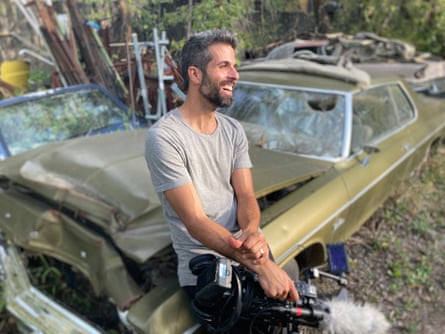
I met my partner, Candice, in Ethiopia when we were both living and working in Addis Ababa. She’s from Vancouver, and was working in communications for a Canadian NGO. I’m from Spain, but was doing very well in Addis as a freelancer, and had no plans to return. But after we’d been together a year, Candice learned that her visa wasn’t going to be renewed, so in 2015 we moved together to Madrid.
I’d seen so many expat friends leave Ethiopia burned out; I was happy enough to be leaving on a high, plus I still had connections in Spain for work. But Candice struggled. She found a job but it didn’t engage her, and though she tried different things she became more and more depressed.
In 2019, after almost five years in Spain, she was offered an exciting opportunity in Vancouver and told me she wanted to take it. I didn’t hesitate: taking chances has been a theme of our relationship, and I assumed I’d cope better in Canada than Candice did in Spain. We got married so that I could get a visa, and moved in early 2020.
At first it was exciting, figuring out where to buy groceries and networking. But the pandemic stopped me making connections and put me at the end of the line for work. My industry is all about who you know, and those circles just got tighter post-Covid. I’ve been out of work now for seven months.
Building relationships outside work has also been a challenge. Social dynamics are different at 40 than they are at 22. Most people my age are starting families or already have kids, and have limited time to hang out. To connect with them, I have to make an effort and really invest.
I’m depressed and exhausted from trying so hard and getting so little in return. I’m also going through a huge identity shift: the classic midlife crisis is hitting hard and I don’t know what fills my tank any more. Maybe this would have happened if we’d stayed in Spain, but I’d have had more friends to talk to.
After five years in Canada, I feel the weight of it. I’ve caught myself thinking more about putting down roots. Just yesterday, on the phone to a friend, I unthinkingly referred to Spain as “home”.
Candice feels terribly guilty and responsible. I don’t blame her at all, but it can be delicate between us. We try to share how we’re feeling and have vulnerable conversations without burdening each other. Your partner can’t be your only support, or you’ll erode your relationship.
Candice has got my back. She’s ready to move if it will make me happier. The tricky part is the place that works for one of us doesn’t work for the other: if we go back to Spain or stay in Vancouver, one of us is going to be unbalanced, and I’m not sure if I’m up to moving somewhere entirely new.
‘I felt like my identity had been wiped clean. Nobody was interested in who I was or my old life’
Helene (not her real name). Moved from Germany to Australia
I’d never thought of even visiting Australia before I met my ex. We were both living in London. I’m German, and was then in my early 20s; he was 10 years older, and our relationship very quickly became serious.
He made it clear early on that he intended to live in Australia and if I wanted to be with him I’d have to move. I think he assumed that because I was living overseas I wasn’t close with my family. I was young, naive and in love, so I agreed.
Within 18 months of meeting, we had a baby, got married and made the move. I was quite reluctant by then, and cried bitter tears as the plane flew out of London. When we landed even the countryside wasn’t pretty to me.
Australia and I were a terrible fit. I’m a feminist lefty who loves cycling, the environment and old things, and I found myself in a car-obsessed, refugee-hating, young country. There was no culture, except Aboriginal culture, and so much racism and sexism. I was shocked by how common it was – people just expected you to share that attitude.
The power dynamics of my relationship shifted instantly. In London, my husband and I had been equals, with our own careers and friends. In Australia, he was finally home and wanted to be out all the time, while I had no one. At first I couldn’t even work because we had no childcare, my qualification wasn’t recognised and I had no connections.
I felt like my identity had been wiped clean. Nobody in Australia was interested in who I was or my old life. They just wanted to know, “How are you finding our country?”, assuming I must be loving it. Though I spoke the language, I just did not get the people. For the first year, I kept feeling this strange sensation, like I was hovering slightly above the ground: that was how rootless I felt.
I started having terrible, aching bouts of homesickness. My husband became very defensive, and sensitive to anything that could be perceived as criticism of his home. I’d cry and beg to move back to London, or anywhere in Europe, and he told me that I’d agreed to come here.
He wasn’t sympathetic; he didn’t try to understand me. That caused a lot of problems in our relationship. If we didn’t have children, I probably would have left within months, but we had our second soon after arriving and later a third.
I think my husband hoped that I’d get used to it, or else suffer quietly, but I found the thought of spending the rest of my life in Australia unbearable. I wanted my children to know my language and culture. My parents were so far away we couldn’t even easily speak on the phone. I couldn’t stand the heat, the lack of seasons, Christmas in summer.
After two years, I gave my husband an ultimatum, and we shook hands on five years. I knew that if I didn’t have a way out I’d have to be treated for depression, but I had to keep on at him to stick to our agreement. We eventually moved to Germany after almost 10 years in Australia. I knew, when we left, that I would never live there again.
For that first year in Germany, I woke up feeling ecstatically happy to be here, but my husband struggled. He expressed regret that he hadn’t been more understanding of my homesickness in Australia, but also said I’d spoiled his time there.
We split up after about four years in Germany; my ex now lives in London, to be near the kids. There were other issues in our relationship, but the fact we couldn’t agree on where to live was a very big one. In the long term, it became impossible to compromise.
There are plenty of things that frustrate me about Germany, but ultimately I’m at home here. People talk about better wages or job opportunities, but they don’t matter as much as feeling like you belong.
























