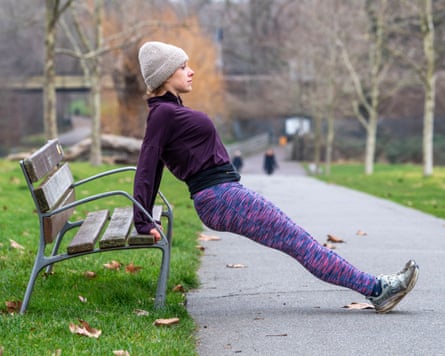
I can’t remember when I first became aware of the phrase: “Women are not small men.” But once I’d heard it, I started hearing it everywhere. Fitness types on social media kept alluding to it. Friends would talk excitedly about the new strain of female-specific exercise research, which was smashing the template we had all held dear for years. And the originator of the phrase, Dr Stacy Sims, was suddenly on every podcast you cared to name. A highly credentialed sports scientist with a huge social media following, she’s hard to avoid, if your algorithms skew vaguely towards self-optimisation content.
While her stance remains divisive in the sports science world, it has the kind of splashy, audacious quality that mainstream exercise advice does not. As a result, it has taken hold in a big way. You might say that Stacy Sims is to women’s exercise what Dr Chris van Tulleken is to ultra-processed foods: changing the conversation almost single-handedly while undaunted by any pushback.
Sims maintains that not only are women not small men (we have a different muscular structure and metabolic profile, for instance) but women over 40 should exercise in a different way from men altogether. Although younger women can follow mainstream fitness advice with no ill effects, those aged 40 and above should be prioritising heavy lifting and “polarised” cardio, she claims. That means either sprint interval training (very intense short bursts of exercise, followed by a break, repeated five times) or gentle walking, with nothing in between.
Age 40, it appears, is chosen as a proxy for perimenopause: the time when our reproductive hormones start to fluctuate unpredictably, with myriad consequences for our overall functioning. Sims doesn’t give an upper age limit, though she does have slightly different protocols for women in their 60s and beyond.
“The women that are 40-plus who are doing the cardio … are going to be what we call skinny fat,” she told Mel Robbins on her podcast. “So that means that they’re not going to have a lot of quality muscle. There’s going to be a lot of fatty tissue within the muscle, and their bones are going to be like chalk.”
Elevate Your Health for Just $29.99/Month
Join the Precision Wellness Subscription at My Healing 365 and get discounted services, priority coaching access, virtual care, and exclusive wellness resources to support your physical, emotional, and hormonal health.
Join for $29.99/MonthAs a 39-year-old woman who loves cardio, I can’t say I was thrilled to hear my fate. From a fitness perspective, I gravitate to what Sims calls “soul food” – exercise that may benefit your mental health, but supposedly isn’t optimal for a midlife body. For me, that means lots of running and yoga, as well as strength training in whatever capacity I can feasibly do at home. In an ideal world, I’d make it to the gym to do some heavy lifting (I completed a personal training qualification a couple of years back and recognise the benefits), but that isn’t easy as a time-pressed mum of two very young children.
For the time being, I feel good on it – fit and strong and capable. I’m able to meet most of the ridiculous physical demands that early motherhood places on me (think: hauling two children and a pushchair over a railway bridge, or manoeuvring through a soft-play tunnel in pursuit of a three-year-old). But is all that about to change the moment the clock strikes midnight on my 40th birthday? Or, to put it less facetiously, is there really a place for special exercise recommendations in the years leading up to menopause?
Table of Contents
The research gender gap
In 2023, a British Medical Journal editorial highlighted a range of studies showing that women are under-represented in exercise research. It found that there are “distinct knowledge gaps in areas such as sport performance, cardiovascular health, musculoskeletal health, postpartum physiology and lactation research”. Another study, from the University of Melbourne, found that sports psychology research is disproportionately focused on men; while another paper highlighted that only 6-9% of reputable sports science studies look exclusively at female athletes. In other words, the research gap is very real. This has led to a wave of female-specific fitness influencers, rushing in to fill the vacuum.
Take cycle-syncing, the idea that women should tailor their exercise routines around their menstrual cycle. Notionally, we should do intense exercise while we’re ovulating, and “strong but stretchy” movements while menstruating. It sounds good on the face of things – flipping the bird to a fitness world that has classically ignored the very existence of periods. But, to date, the scientific basis for cycle-syncing is limited.
Then there’s Sims – MSc and PhD – who has dozens of scientific papers under her belt and a faculty position at Stanford. Clearly, she’s far more than some kooky wellness influencer – and to her devotees, she’s something of a feminist hero. As she told Robbins: “I think that when we look right now at [fitness trends] all of that data is really drawn from men and just generalised to women, which is a huge disservice.” Her recommendations are seductive in their certainty. For instance, she told Andrew Huberman on his podcast the Huberman Lab that the average fitness class is bad for older women because it doesn’t create a “strong enough stress to invoke the postexercise growth hormone and testosterone responses that we want to dampen [our] cortisol.” The average listener may find herself won over by the sheer sciencey-ness of Sims’ rhetoric.
However, strong claims require strong evidence, and not everyone agrees that her studies make the cut. Laurel Beversdorf (a strength and conditioning coach) and Sarah Court (a physical therapist) are the hosts of the podcast Movement Logic. “It really feels good that someone is finally standing up for us, bringing attention to inequalities,” says Beversdorf. “But it’s actually the same misogynistic playbook that we’ve seen across many decades. Let’s problematise women’s bodies. Let’s fragilise women. Let’s make it all about their hormones, and let’s treat them all the same. She’s saying men can do a much wider variety of things and benefit, but for women she’s taking exercise options off the table.”
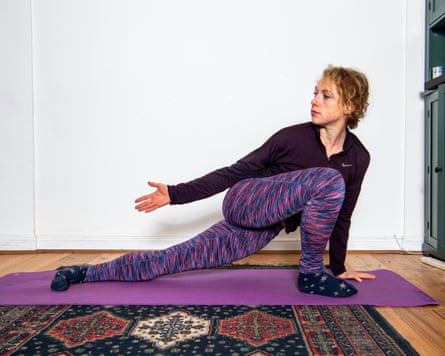
Elizabeth Davies (thiswomanlifts) is a fitness coach who trains women at all stages of life, and the author of the upcoming book Training for Your Old Lady Body. She thinks that far from motivating women to work out, crafting ultra-specific recommendations can create yet another barrier. “There are lots of loud voices on social media giving very specific guidance on how women must train at different life stages, and perimenopause is a key one where I see this,” she says. “As people working in the fitness industry, I think it’s our responsibility not to overcomplicate movement by creating arbitrary rules for women or for certain life stages, unless there is an evidential basis to do this.”
This tracks with me. When I did my own personal training qualification in 2024, I learned about a few “special populations” (eg children and elderly people) who might need specially tailored fitness advice. Everyone else, we were taught, could follow the same blanket recommendations.
What does the evidence say?
The UK government advises that adults aged 19-64 should conduct 150 minutes of moderate-intensity activity, such as brisk walking, every week, or 75 minutes of vigorous intensity activity such as running. We should also do at least two sessions of “strengthening activities that work all the major muscle groups”. Heavy lifting is one such activity for sure, but so are yoga, pilates, gardening and carrying children. By the standards of a fitness influencer, that might not sound like much – nobody ever became TikTok famous by walking for half an hour a day with heavy shopping bags. But it’s nonetheless a useful benchmark, and a challenging one for many people to accomplish. According to the 2021 Health Survey for England, 59% of women met the aerobic guidelines, while just 29% met the bar for strength training. (The respective figures for men are 70% and 36%.) Arguably, it’s counterproductive to worry about the exact exercise method when so few of us are doing anything at all. Sims herself has said her recommendations are not designed for sedentary women.
For those of us who are already hitting the targets, and want to improve our fitness, the advice is clear. We should apply the principle of progressive overload, which in a nutshell means doing more over time: gradually increasing the intensity, volume, frequency or duration of our workouts.
Beversdorf and Court think it’s “potentially extremely harmful” to scare women off cardio – especially given sprint interval training isn’t exactly accessible to beginners. “Moderate-intensity cardio has some of the most consistent and robust evidence behind it,” say Beversdorf. “It delivers some of the most reliable health benefits, and there’s a lot of evidence to support that.” For instance, a major 2022 study, which tracked more than 100,000 adults over 30 years, found that people who engaged in high levels of moderate physical activity were up to 38% less likely to die from heart disease.
As for strength training, Davies notes that there are plenty of benefits to lifting heavy, meaning a weight you can only manage for between one and six reps. (Sims maintains that women over 40 should exclusively train in this way.) Still, the evidence suggests that if you don’t have access to heavy weights, there are other ways to meet your quota. “The research is very clear that we can build strength and muscle with lighter weights, so long as we work close enough to the point of failure, meaning the point at which you could not manage another good-quality rep,” says Davies.
Do women over 40 need special messaging?
The obvious counterpoint is this: if women’s bodies are still so under-researched, of course the official recommendations would need some time to catch up. Sims says her detractors are conducting “a very nasty and personal misinformation campaign against me,” and that “people need simple, science-based, agreed-upon plans they can follow”.
Her recommendation about heavy lifting, she says, come from randomised controlled trials that focus on sex differences in ageing. “Everything I talk about is to make women stronger, both physically and mentally. To not follow male data blindly. Yes, a lot is the same, but there are also differences, and they are critical, especially as we age and as our fitness level changes.”
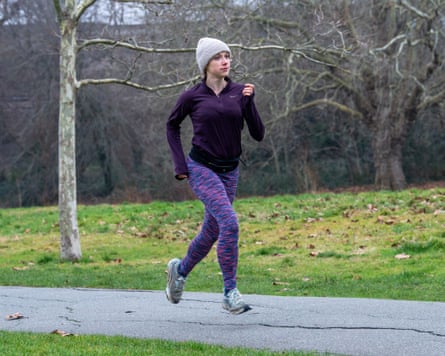
Sims’ prescriptions remain the subject of lively debate across the sports science community, and whatever you make of them, she has at least exposed a gap in the research base that needs redressing. However, even if the science were incontrovertible, I don’t think the same “science-based plan” would be appropriate for every woman over 40. For instance, it’s hard to know where an individual’s own performance goals fit into the prescription. Personally, I’d like to run a sub-45-minute 10k, and I’m not sure many running coaches would advise replacing all my training with twice weekly sprint sessions.
That’s not to mention all the other factors that affect our individual training needs. Davies is a big fan of autoregulation, or adjusting your training session depending on how you feel that day. “For most of the women I’ve worked with, the challenge isn’t motivation or discipline, but capacity,” she says. “When you’re running on broken sleep, programmes that rely on ‘no excuses’ or ignoring fatigue can backfire, increasing injury risk or simply making exercise feel like another thing you’re failing at. What actually works better is training that’s flexible and adaptable, where progress is built over months and years.”
Beversdorf and Court think that, if women over 40 do need specially tailored advice, then that has nothing to do with our physiological makeup. Rather, it’s about providing an antidote to the cultural poisons we were exposed to in our youth – a culture that emphasised thinness above all else, and told women they would get “bulky” if they so much as eyed a barbell. “The message that you need to start weight training in your 40s is not incorrect, but it’s not to say that you should be doing cardio up to that point and then switch to weights,” says Court. “Cardio and weights are appropriate for women across their lifespan. But the benefits of strength training are a new message to us, which is why it’s been emphasised so much to this age group.”
And perhaps this is where female-specific training advice gets something right. My friend Amy, 39, who started strength training off the back of Sims’ recommendations, says she has found it life-changing. “Having spent my 20s and 30s trying all types of exercise, it always felt like a slog, and it always felt like it was with the aim of being small,” she tells me. “For the first time in my life really, I feel like that’s no longer the purpose of my exercise.” (I wonder, though, if this could have been just as true if she were 29 and encountering heavy lifting for the first time?)
Hopefully, we are all starting to move on from an era of strength training for men, cardio machines and tiny little pink hand weights for women. There is a lot to be said for a fitness approach that leaves you proud to take up space. But not everyone’s going to gel with the “women are not small men” messaging. To me it feels like a diminishment – particularly since so many of the activities I love (yoga, fitness classes, long runs, lifting lighter weights) are downplayed, problematised and dismissed. And need we point out that some women are actually bigger than some men?
“We’re used to things being overcomplicated for us as women,” says Court. “We have a 10-step face skincare routine that we’re supposed to do every night. But it doesn’t need to be that way. Chase the performance goals that you have, or meet the minimum guidelines. Either way, you’re doing better than a lot of people.”

























