
Jonathan Price has always been active and exercise-focused. Growing up in south Wales, rugby was his first love. Through school, university and beyond, he also surfed, rowed, played squash and ran competitively – on track, in 10k races and cross-country. Career and family demands meant that much of this fell away in later years, but the running stuck. He found time for marathons, half marathons – “I’d run a half marathon every weekend just for fun,” he says – and, through the working week, regular 30- or 40-minute runs to manage stress and clear his head. “I travel a lot for work,” says Price, now 50, a company CEO. “With running, all you need is a pair of running shoes and you can do it anywhere.”
By his mid-40s, though, Price’s body was beginning to object. He wasn’t recovering so well. “I could run just fine but I’d be in pain for two or three days afterwards,” he says. On top of this, every six months or so, his lower back seemed to seize up completely. A physiotherapist thought it was “tight hip flexors” and pointed Price towards “hip opening” exercises, designed to reduce stiffness and increase range of motion. Someone else prescribed him muscle relaxants, but the pain only deepened, and his range of movement continued to dip. Finally, in the summer of 2023, a chance encounter with a hip surgeon led to the diagnosis of osteoarthritis and, at the end of that year, Price, then 47, had a double hip replacement.
Was Price unlucky, or did decades of exercise accelerate his joint damage? After so many years, so many miles, and so many cycles of use, had he simply, as his surgeon, Giles Stafford, puts it, “hit his number”?
As a consultant orthopaedic hip surgeon specialising in sports-related hip disorders, Stafford often sees patients who are experiencing joint problems earlier than most. “They are usually active people who have done a lot of sport and knackered their joints through that,” he says. Stafford likens our joints to bearings in a car. “There’s clearly a genetic aspect, but also a big mechanical aspect too,” he says. “We all have a certain number of cycles in us before the damage sets in, and someone who is going to the gym, running marathons, taking on high-impact, high-intensity, repetitive exercise programmes might hit their number younger and faster.”
Osteoarthritis (OA) is the painful result of the breakdown of cartilage, the smooth, slippery tissue that cushions the ends of our bones so that we can move our joints freely without friction. OA is on the rise. Each year, more than a quarter of a million people in the UK have joint replacement surgery, and by 2060 demand is expected to have risen by 40%. While there is evidence of rising cases in younger people, by the age of 70 one in two UK adults will have OA. For some, that might just mean some stiffness while walking up the stairs. For others, it could mean needing help to wash and dress. In old age, OA will often determine whether someone can live independently and if their final years are spent navigating pain.
When it comes to causes, though, the picture is confusing. The way we are made is key. Our genes help determine our build, our gait, how we load our joints and where the pressure falls when we move. Genetics are also believed to play a role in the quality of our cartilage and the inflammatory responses that can damage it and drive OA forward. Price now knows that he was born with a subtle shape abnormality that is not uncommon. The ball of his hip joint’s ball-and-socket wasn’t quite spherical, so it didn’t rotate smoothly without friction, which quietly, over time, accelerated damage with each cycle of use. Beyond genetics, though, is asking too much of our bodies, or asking too little raising our OA risk? Should we worry about over-exercise, not enough exercise or the wrong kind of exercise? The answer, unfortunately, seems to be all three.
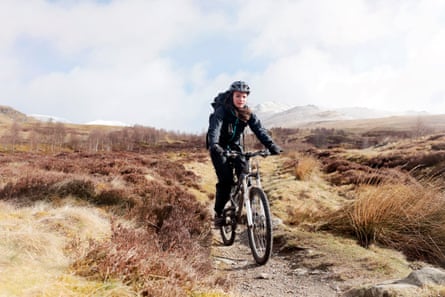
A sedentary lifestyle is a major driver. This is partly due to OA’s link with obesity, which increases the weight on our joints, and raises inflammation, but exercise matters beyond this. Cartilage relies on synovial fluid – joint fluid – for its nourishment, and we need to move around in order for that fluid to circulate. “Sitting for long periods of the day also seems to cause metabolic changes that are pro-inflammatory,” says Dr Benjamin Ellis, consultant rheumatologist at Imperial College Healthcare in London. Building strength and muscle also acts to absorb impact and stabilise our joints. “Our joints, our bones, our bodies strengthen under challenge and that is done by tiny micro-injuries,” says Ellis. “The body goes in to heal them and that healing builds bone and muscle.”
Elevate Your Health for Just $29.99/Month
Join the Precision Wellness Subscription at My Healing 365 and get discounted services, priority coaching access, virtual care, and exclusive wellness resources to support your physical, emotional, and hormonal health.
Join for $29.99/MonthOn the other hand, if we overload the body’s capacity to heal, or sustain too great an injury, we’re back in the OA danger zone, though it may take decades for the effects to be felt. An anterior cruciate ligament (ACL) injury – a tear or sprain in the centre of the knee – is one example. Professional footballers, who are prone to ACL injuries, have two or three times the average risk of OA in later life. Research also points to a raised OA risk among competitive runners – while recreational running seems to be protective. (Unhelpfully, the definition of “recreational” and “competitive” varies between studies.) Many orthopaedic surgeons – Stafford included – recommend cycling, swimming or an elliptical trainer over running, or running on grass or a treadmill rather than tarmac to soften the impact on our joints.
According to David Vaux, an osteopath, consultant for Arthritis Action and author of Stronger, exercise in midlife should be viewed a bit like a dosage of medicine. “If you do too much or too little, you’re going to be in trouble,” he says. “The main thing I see in clinic are people who are injured, and people who are burnt out – and those two things are kryptonite in midlife.” Both can lead someone to stop exercising altogether, or to keep going too hard before they have recovered. Either can result in OA.
For most midlifers, says Vaux, a healthy exercise programme is steady and consistent, with plenty of built-in recovery time. He says: “It can look quite boring, but boring is good.”
Saket Tibrewal, a consultant orthopaedic surgeon at Cromwell hospital in London who specialises in the knee, makes a similar point. “As we get older, our capacity to heal takes longer,” he says. “I do see a lot of runners who have taken it up in the last few years, and are starting to get knee pain and knock-on effects. They might be going for a run, then doing it again the next day, or maybe just having one day off. A lot of people don’t understand how important recovery is.”
Several orthopaedic surgeons have expressed reservations about high-intensity, high-impact exercise programmes. “Anything that involves a lot of deep-weighted squats, and repeatedly taking your body to end range under load, can damage your joints,” says Stafford. Gareth Jones, a specialist knee surgeon at Imperial College, has seen patients in their mid-20s and early 30s who have already lost a lot of cartilage from under their kneecaps through following such programmes. One of Tibrewal’s patients is Naomi Pannell, 27, who recently tore her ACL competing in a CrossFit event.
“I was in the semi-finals in Madrid, my biggest competition yet,” says Pannell. “It happened on day three, the last day, in 36C heat.” Pannell and her partner had completed the chest-to-bar pull-ups and the double-unders (like skipping except the rope passes under your feet twice in one jump) and next came four rounds of “sandbags” (lifting a heavy sandbag from the floor and resting it on the shoulder). “When I went to lift the sandbag for my second round, my knee popped out and popped in again,” says Pannell. “I didn’t fall to the floor. I went to lift it again and it did the same thing.” She completed some of the remaining circuit – including a handstand walk – and by the end her knee was badly swollen. “When I found out it was a full ACL rupture, I spent a week crying,” says Pannell. “I’ve never had an injury in my life.” Tibrewal, who will be operating on Pannell, blames fatigue. “These programmes are very good for cardiovascular fitness and strength, but they involve high repetition and high loading, and fatigue is a badge of honour,” he says. “After multiple rounds, if you’re pushed to the point where your muscles are really tired, then you can lose neuromuscular control of the joint. You lose proprioception – your body’s internal awareness of where it is in time and space – and that’s when something simple that you’ve done many times before can go wrong.”
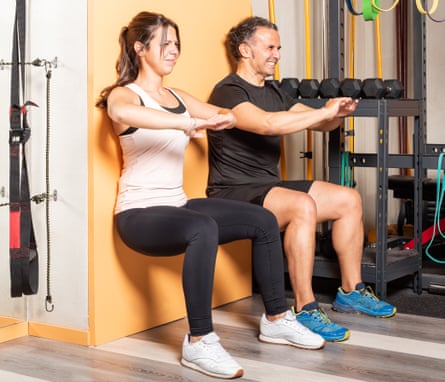
According to Vaux, a healthy midlife exercise regime that’s protective against OA involves “steps and reps”. “A walk, a jog, a bike ride a couple of times a week and you need strength training, too. I usually prescribe following an isometric-only strength programme – such as wall sits and planks, which you can do anywhere – for at least two months before you do anything more dynamic [in terms of strength training]. If someone is doing that, I’ll take that person’s chances on healthy joints in 20 years’ time over anyone doing anything extreme and get-fit-quick.”
The most important thing is listening to your body. “Pain alone isn’t always a reliable guide because some discomfort can be a normal part of adaptation,” says Vaux, “but persistent joint pain, night pain or pain on certain movements, swelling and stiffness should not be ignored. It’s your body telling you there is an issue.” It’s also important to understand your level of fatigue. “Is your performance stable, improving or decreasing? Decreasing performance indicates you are not recovering properly. How are you sleeping? Is your heart rate significantly elevated first thing the day after exercise? The solution to any of these might be to get something checked out, or to modify your exercise and rest.”

Chris Dunn, 49, a dedicated runner, waited until he had grade-four bone-on-bone OA in his knee before he stopped running and had it looked at. “I can probably track it back to 2015, when a bad tackle in football twisted my ACL,” he says. Despite the injury, that same year he completed an Ironman triathlon and a marathon. In the years since, he had continued to compete in many more marathons, as well as regular triathlons. “My leg was probably weakened and I weakened it more, my alignment shifted to compensate, and that overloaded different parts of the knee joint,” he says. “Silly really – I left it too long – but once you’re in the runner’s mindset, you think: ‘It’ll be all right. It’ll repair itself.’ When you push yourself to the limits, it’s uncomfortable anyway! You tell yourself it’s just a twinge. By 2023, it had got to the point where I was only able to do 5 or 6km of running and afterwards it was so painful I could only hobble.”
In May 2024, Dunn underwent five hours of surgery to straighten his leg and try to offload the damaged area. It was very successful. “I was home the next day with a knee brace,” he says. “I stayed on crutches until August. The following April, I did the London Marathon and in July I did an Ironman. At the moment, running feels comfortable. There’s a chance that years down the line I might need a knee replacement, but we’ll play it by ear. I want to enjoy it while I can.”
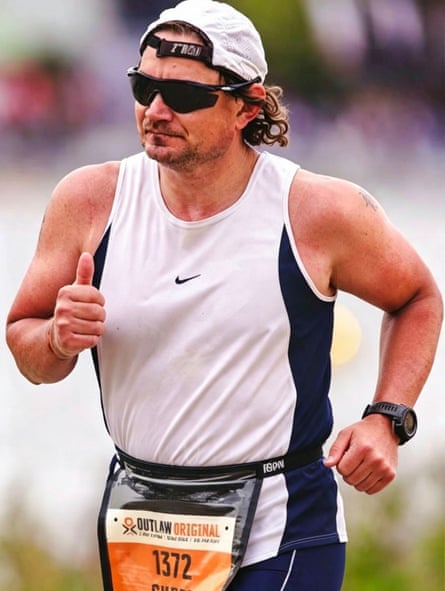
Price also got back to running after his double hip replacement. Last year, he completed the world’s deepest marathon, which took place in a zinc mine in Sweden. “It took a while to get past that strange sensation where everything feels different, but once I started running, it got easier and easier,” he says. Pannell, meanwhile, is hoping to compete in the CrossFit Open in February.
“There’s no universal threshold beyond which exercise becomes harmful,” says Vaux. “It’s shaped by so many factors – such as age, genetics, previous injuries – and it isn’t fixed: it can expand as tissues adapt. That’s one of the remarkable things about the human body. But we need to give it time to get there, and to listen to what it’s telling us on the way.”

























